


Views: 0 Author: Site Editor Publish Time: 2026-06-15 Origin: Site


In high-volume production, the resistance welding electrode remains the critical point of failure or success. You will find standard consumables often lead to rapid degradation. We call this mushrooming. It causes erratic weld quality and unacceptable downtime. Transitioning from generic supplies to application-specific alternatives requires careful engineering. You must balance thermal and electrical conductivity against mechanical wear resistance. Our guide provides a structured, evidence-based framework for these decisions. We show you how to evaluate base metals and match RWMA material classes accurately. You will also learn to establish strict vendor selection criteria. This approach helps drive down your cost-per-weld without sacrificing joint integrity. Proper planning transforms chaotic production floors into predictable, highly efficient operations. By following these principles, you ensure every weld meets strict quality tolerances.
The Core Trade-off: Electrode selection strictly dictates a compromise between electrical conductivity and physical hardness—there is no universal solution.
Material Matching: Base metal properties (e.g., galvanized steel vs. aluminum) determine the required RWMA alloy class (Group A vs. Group B).
Geometry Matters: Proper tip geometry combined with aggressive water cooling extends electrode life and reduces dressing frequency.
Vendor Evaluation: Partnering with a specialized Resistance Welding Electrode manufacturer ensures consistent alloy purity, custom CNC machining tolerances, and reliable supply chains.
Production managers often focus heavily on the initial purchase price of consumables. This metric rarely reflects the true operational expense. Buying cheaper consumables usually results in higher overall manufacturing costs. You pay a heavy penalty in labor for frequent tip dressing. Your lines suffer from increased scrap rates and unplanned downtime.
Evaluating a Resistance Welding Electrode requires measuring the actual cost-per-weld. A low-cost copper tip might require dressing after 500 cycles. A precisely alloyed alternative might easily exceed 2,000 cycles before requiring maintenance. We define success by maximizing this verifiable welds-per-dress metric.
You must acknowledge all electrodes wear down eventually. Predictable degradation allows you to schedule maintenance during planned shifts. Unpredictable failure disrupts the entire manufacturing rhythm. Efficient thermal management directly impacts these cycle times. Using the correct copper alloy prevents the tip from sticking to the workpiece. This thermal efficiency allows for faster repetitive weld cycles. It prevents overheating the tooling and protects your equipment investment.
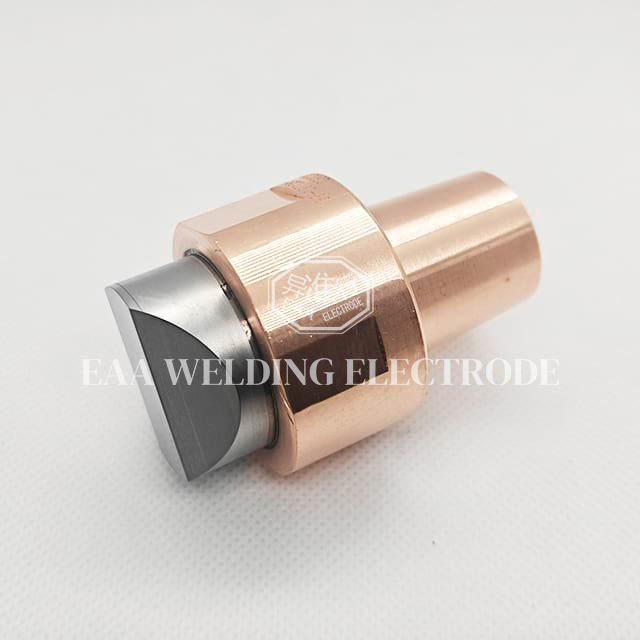
Engineers evaluate resistance welding consumables using two foundational criteria. You cannot optimize one without impacting the other. Understanding this dynamic prevents catastrophic failures on the production floor.
Electrical and Thermal Conductivity: The tool must carry high electrical currents efficiently. It must also rapidly dissipate heat away from the weld face. Poor conductivity creates excess surface heat.
High-Temperature Hardness (Annealing Resistance): The alloy must resist plastic deformation under high forge pressures. Welding temperatures cause pure copper to soften instantly. Hardness prevents the face from flattening out.
We must acknowledge the fundamental physics driving this matrix. There is a strict inverse relationship between conductivity and hardness. Modifying an alloy for maximum hardness inherently sacrifices its electrical conductivity. Adding chromium or beryllium strengthens the copper matrix. However, these elements impede electron flow.
If you need maximum current for highly conductive metals, you accept a softer tip. If you need extreme forge pressure for hard steels, you accept lower thermal efficiency. You must identify where your specific application falls on this spectrum. Making the wrong compromise guarantees premature tool failure.
The American Welding Society (AWS) and the Resistance Welding Manufacturing Alliance (RWMA) provide strict material standards. These standards categorize alloys into distinct performance groups. Matching your base metal to the correct RWMA class ensures optimal joint integrity.
Group A (Copper-Based Alloys) covers the majority of standard industrial applications. We divide this group into three primary classes.
Class 1 (Zirconium Copper) offers high conductivity and low hardness. We recommend it heavily for aluminum and magnesium. It is also the superior choice for coated or galvanized materials. The high conductivity prevents the zinc coating from sticking to the tip.
Class 2 (Chromium Copper) serves as the industry baseline. It provides a highly versatile balance between conductivity and hardness. We recommend Class 2 for clean, mild carbon steels. It dominates general automotive and appliance manufacturing.
Class 3 (Beryllium or Nickel-Silicon Copper) delivers extremely high strength but much lower conductivity. You should specify Class 3 when welding high-resistance materials. These include stainless steel, Inconel, and titanium. The exceptional hardness withstands the massive forge pressures required for these tough metals.
Group B (Refractory Metals) includes Classes 10 through 14. These utilize Tungsten, Molybdenum, and Copper-Tungsten composites. They offer extreme wear resistance and heat tolerance. We use them for cross-wire welding, nut welding, and highly specialized micro-welding. A standard copper alloy would melt instantly in these specific applications.
Use this rapid-reference chart to cross-match your base metal to the recommended RWMA Class. Selecting the right Resistance Welding Electrode relies heavily on this baseline data.
Base Metal Type | Recommended RWMA Class | Primary Technical Reason |
|---|---|---|
Aluminum / Magnesium | Class 1 (Zirconium Copper) | Maximum conductivity prevents surface sticking and heat buildup. |
Galvanized / Coated Steel | Class 1 (Zirconium Copper) | Resists zinc alloying; prevents rapid tip degradation. |
Clean Mild Carbon Steel | Class 2 (Chromium Copper) | Optimal balance of hardness and thermal dissipation. |
Stainless Steel / Inconel | Class 3 (Beryllium/Ni-Si Copper) | High mechanical strength withstands extreme forge pressures. |
Nut Welding / Cross-Wire | Class 10-14 (Refractory Metals) | Extreme heat tolerance prevents premature melting under sustained load. |
Material composition represents only half the equation. The physical geometry dictates heat concentration and workpiece accessibility. Selecting the wrong face shape ruins an otherwise perfect alloy choice.
Pointed/Conical: This remains the standard for flat sheet metal. It provides excellent heat concentration directly at the weld nugget. However, it wears significantly faster under heavy forge pressure.
Dome/Radius: We prefer this shape for its superior structural integrity. It withstands high weld forces without mushrooming quickly. Automated setups use dome shapes because they are the easiest to align and dress.
Flat: You use flat faces when surface marking must remain minimal. We often deploy them on the visible side of a consumer product. They help create "invisible" welds on cosmetic panels.
Offset/Eccentric: Tight corners or flanged parts dictate this geometry. The offset tip reaches into restricted clearances. You must monitor them strictly. The uneven pressure distribution always accelerates mechanical wear.
Your engineering team must evaluate the physical constraints of the tooling. An offset geometry might be unavoidable. If so, you should anticipate a shorter lifecycle. Compensate by optimizing your cooling parameters and dressing schedules accordingly.
Theoretical lifespan means nothing if operational realities remain ignored. We see excellent materials fail daily due to poor shop floor practices. Proper implementation separates profitable lines from struggling ones.
Water cooling imperatives demand strict attention. An electrode is only as good as its cooling tube. Operators frequently cut the water tube too short. You must bring the water tube within 1/4-inch of the internal face. Failing to do so creates steam pockets. This voids any alloy lifespan advantage instantly. The copper softens, and mushrooming accelerates.
Tip dressing protocols require rigorous standardization. Relying on operator guesswork introduces massive quality variations. We establish standard dressing schedules based on statistical process control (SPC). Data-driven stepper programs automatically increase current as the face grows. They signal the exact moment dressing becomes mathematically necessary.
Coated metal challenges require specific mitigation strategies. Galvanized steel introduces severe zinc buildup. The zinc melts and alloys with the copper face. This creates a brittle brass layer. Class 1 materials or dispersion-strengthened copper (like GlidCop) help mitigate this alloying at the tip. You must also adjust your squeeze times to let the zinc flow away before applying full welding current.
Your procurement strategy dictates your ultimate success. Treating these precision components as generic hardware leads to disastrous results. You need a reliable partner, not just a parts broker. Finding the right Resistance Welding Electrode manufacturer ensures long-term operational stability.
Demand rigorous alloy certification and traceability. You should always request material test reports (MTRs) for your batches. These documents verify strict RWMA standard compliance. Impure copper batches contain micro-voids or incorrect element ratios. These flaws lead to catastrophic failure under pressure. A trustworthy manufacturer provides traceability without hesitation.
Assess their custom CNC capabilities thoroughly. Modern assemblies often require complex, cold-formed, or custom-machined geometries. The vendor must hold tight tolerances specific to your automated tooling. Poor machining leads to water leaks and misalignment.
Look for comprehensive inventory and application engineering support. A superior manufacturer offers onsite application audits. They analyze your failed parts to optimize your consumable spend. They help identify cooling issues and recommend geometry tweaks. This engineering partnership reduces bottlenecking and continuously improves your production metrics.
Proper selection is a rigid engineering process governed by the base metal, heat dissipation needs, and required weld forces. You cannot guess your way to a stable manufacturing line. Balancing the conductivity-hardness matrix ensures reliable nugget formation and prolonged tool life. The physical geometry dictates accessibility, while strict cooling protocols keep the alloy intact.
Take immediate action to improve your process. Conduct a thorough weld tear-down analysis of your current production line. Measure your baseline welds-per-dress to establish a verifiable benchmark. Finally, consult with a certified manufacturer to sample optimized alloys or custom geometries. Small engineering adjustments yield massive improvements in uptime and quality.
A: Switch to RWMA Class 1 or dispersion-strengthened copper. These alloys resist alloying with molten zinc. You must also optimize your water cooling to prevent heat buildup. Adjusting your squeeze times allows the zinc to melt and clear the weld zone before full current hits.
A: Class 2 offers a balanced trade-off between conductivity and hardness, making it ideal for clean, mild steel. Class 3 sacrifices electrical conductivity to achieve extremely high hardness. You use Class 3 strictly for high-resistance, high-forge metals like stainless steel or Inconel.
A: Dressing frequency depends entirely on the base material and strict quality standards. Avoid arbitrary timeframes. Implement data-driven stepper programs that track weld counts and measure face expansion. Base your dressing schedule on statistical process control to maximize tool life.
A: You should avoid this practice completely. Standard copper lacks the specific alloying elements like chromium or zirconium. It also lacks the critical cold-working required to achieve RWMA hardness specifications. Homemade tips will mushroom instantly under industrial forge pressures.


