


Views: 0 Author: Site Editor Publish Time: 2026-08-28 Origin: Site


Every day, massive industrial systems rely on a very simple interaction. They need a highly conductive terminal to establish reliable electrical contact. You typically connect this terminal to a non-metallic part of a circuit. This component could be a liquid electrolyte, a solid semiconductor, or a complex weldment. We call this essential component a copper electrode. The core mechanism sounds straightforward. However, the business stakes remain incredibly high. Specifying the wrong purity, form factor, or alloy causes severe problems. You might face excessive downtime or poor plating deposition. You could see structural weld failures. Researchers might even generate invalid lab results. We wrote this guide to solve these exact problems. It provides a concrete evaluation framework for your operations. You will transition from simply understanding the component to taking decisive action. We will help you source the exact specification required for your unique application.
Purity drives performance: For chemical and plating applications, 99.9%+ purity (CAS 7440-50-8) is non-negotiable to prevent bath contamination.
Application dictates composition: Pure copper is ideal for electroplating, while resistance welding requires specialized copper alloys (e.g., Chromium-Copper) for thermal wear resistance.
Traceability is critical: Reliable procurement requires valid Material Test Reports (MTRs) to verify trace elements and dimensional tolerances.
Engineers consistently choose copper for electrical applications over alternative metals. The reasons come down to fundamental physics. Copper offers exceptionally low electrical resistance. Electrons flow through it freely. This high mobility minimizes energy loss during transmission. Furthermore, copper provides rapid heat dissipation. High-amperage applications generate massive amounts of thermal energy. If a material cannot shed this heat quickly, it melts. You rely heavily on the humble copper electrode to balance both high conductivity and thermal stability.
We must also clarify the distinct roles these components play in electrolytic processes. They function as either anodes or cathodes. Their behavior changes completely depending on this assignment. As an anode, the copper component sacrifices itself. It releases copper ions into a surrounding chemical bath. You see this constantly in electroplating setups. As a cathode, the component receives material. Positive ions travel through the electrolyte and deposit onto the cathode surface. Understanding this dynamic helps you predict wear rates and replacement schedules.
Industrial standardization provides a critical baseline for material verification. Chemical abstracts service numbers act as global identifiers. Pure copper uses the registry number CAS 7440-50-8. Procurement teams use this exact number to verify baseline materials. You cannot simply trust vague supplier descriptions. Standard elemental data ensures you receive the expected atomic structure. This verification process eliminates dangerous impurities before they enter your facility. It sets a universal standard for cross-border manufacturing operations.
Different industries utilize copper terminals in vastly different ways. We can categorize these applications by their desired outcomes and operational contexts. Below is a structured breakdown of the most common commercial and laboratory applications.
Resistance Spot Welding
Outcome focus: You must deliver high-amperage current quickly without the electrode melting. The goal is fusing two metal sheets together in milliseconds.
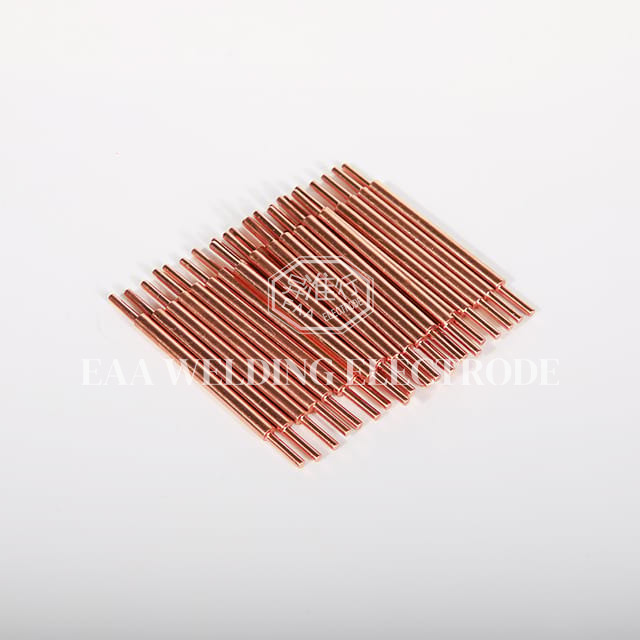
Context: Pure copper is often too soft here. The immense mechanical pressure would crush a pure copper tip. Therefore, manufacturers require specialized alloys. Battery manufacturing often introduces unique challenges. High-volume cell welding demands extreme wear resistance. In these scenarios, an alumina dispersed copper alloy electrode outperforms standard options. It retains exceptional hardness even when exposed to intense, repetitive heat.
Electroplating and Electrowinning (Metallurgy)
Outcome focus: The process demands consistent, even dissolution of copper into chemical baths. You want a uniform layer of copper to coat another object.
Context: This requires high-purity flat anodes or solid rods. Impurities in the metal will cause a buildup of sludge at the bottom of your tank. This sludge contaminates the chemical bath and ruins the final plated finish.
Educational and Research Laboratories
Outcome focus: Educators use these items for demonstrating galvanic cells or standard reduction potentials. They provide a visual, practical way to teach electrochemistry.
Context: Laboratories typically utilize standard one-piece flat copper pieces. These shapes offer ease of handling. Students can easily attach alligator clips to flat plates. Durability matters less here than accessibility and basic purity.
Selecting the correct material requires a strict evaluation process. You cannot treat all copper products interchangeably. Material purity directly dictates electrical performance. You will often choose between Oxygen-Free High Thermal Conductivity (OFHC) copper and standard Electrolytic Tough Pitch (ETP) copper. OFHC copper guarantees 99.99% purity. ETP copper usually provides 99.9% purity. This tiny percentage difference matters tremendously. Trace impurities like phosphorus or oxygen impact electrical resistance. Oxygen inclusions can cause hydrogen embrittlement when exposed to certain gases. This makes the metal brittle and prone to structural failure.
Mechanical integrity requires a different approach. Pure copper easily deforms under mechanical stress. You must evaluate specific alloy additions for harsh environments. Chromium-Copper (CuCr) and Zirconium-Copper (CuCrZr) alloys are highly evaluated for high-heat environments. They prevent deformation while maintaining acceptable conductivity. Copper-Tungsten (CuW) combinations serve entirely different needs. Engineers evaluate CuW for electrical discharge machining (EDM). They also use it in severe arcing environments. The tungsten provides an incredibly high melting point. The copper provides the necessary electrical pathways.
Form factor and tolerances also demand close attention. You must assess manufacturing scalability. Can your vendor handle CNC machining for custom profiles? Many applications require precise tip geometries or specific flat plates. Rods must meet tight diametric tolerances to fit perfectly into holding fixtures. A slight deviation in form factor creates poor electrical contact. This leads to dangerous localized heating.
Comparative Material Specifications
Material Type | Purity / Base Alloy | Primary Characteristic | Ideal Application |
|---|---|---|---|
OFHC Copper | 99.99% Minimum | Zero oxygen, high conductivity | Vacuum electronics, precision plating |
ETP Copper | 99.90% Minimum | Excellent conductivity, economical | Standard electrical grounding, lab use |
CuCrZr Alloy | Copper + Chrome + Zirconium | High softening temperature | Resistance spot welding tips |
CuW Composite | Copper + Tungsten | Arc erosion resistance | Electrical discharge machining (EDM) |
Even perfectly specified materials face operational hazards. Physical deformation remains a primary risk. Operators often refer to this as "mushrooming." High pressure combined with intense heat causes thermal softening. This is exceptionally common in welding applications. When the tip flattens out, the surface area increases. This drops the current density and ruins the weld quality. You mitigate this risk by implementing regular tip dressing schedules. You must also optimize your water cooling cycles to keep the metal below its softening threshold.
Chemical environments introduce oxidation and passivation risks. Surface degradation happens quickly in harsh chemical baths. It also occurs in open air environments. Copper reacts to form oxides on its exterior layer. This oxide layer creates a high-resistance barrier. Electrical current struggles to penetrate this barrier. You experience significant efficiency losses as a result. Mitigation requires strict proper storage. You should implement pre-use cleaning protocols. Regularly monitoring your bath chemistry also prevents aggressive oxide formation.
Galvanic corrosion represents a hidden danger. This unintended degradation happens when you pair incompatible metals. Connecting a copper component directly to aluminum in a humid environment invites trouble. The conductive environment acts as an electrolyte. The less noble metal rapidly corrodes. You must design your systems to prevent these bimetallic interactions. Using dielectric greases or transition plates helps isolate the reactive surfaces. Ignoring galvanic risks guarantees premature system failure.
Procurement teams need strict vendor evaluation rules. Sourcing industrial components is vastly different from buying consumer goods. You must structure your purchasing process around verifiable data and manufacturing reliability. Protect your supply chain by focusing on these three core areas:
Certifications and Documentation: Demand strict ISO compliance from your suppliers. You must request batch-specific Material Test Reports (MTRs) before accepting any delivery. MTRs prove the exact chemical makeup of the batch. Reject any suppliers offering vague "high purity" claims. If they cannot provide a verified chemical breakdown, you cannot trust their products.
Manufacturing Scalability: Assess the vendor's production flexibility. Can they transition smoothly from low-MOQ prototyping to bulk manufacturing? Research and development teams need small batches for testing. Once the product succeeds, you need mass production. Ensure your vendor can scale up without sacrificing dimensional tolerance or purity standards.
Customization and Lead Times: Evaluate the supplier's true in-house machining capabilities. Many vendors simply act as middlemen. They rely entirely on third-party fabricators. This creates dangerous vulnerabilities in your supply chain. Suppliers controlling their own fabrication ensure better quality control. They also provide significantly shorter lead times for custom profiles.
Navigating the industrial metals market requires clear operational priorities. Your final selection relies entirely on a delicate balancing act. You must weigh pure electrical conductivity against mechanical durability. You must also factor in chemical purity based on your specific industrial environment. Spot welding demands durable alloys to resist thermal softening. Precision electroplating requires absolute high-purity copper to protect chemical baths. Understanding these boundaries ensures continuous, reliable operations. Do not leave your component specifications to chance. Take proactive steps to secure the right materials for your facility today. Request a technical consultation from a certified manufacturer. Download a comprehensive material specification sheet for your engineering team. Ask your supplier for a physical sample so you can conduct real-world operational testing.
A: Pure copper offers maximum electrical and thermal conductivity but remains physically soft. A copper alloy mixes in elements like chromium, zirconium, or tungsten. These additions slightly reduce electrical conductivity but drastically increase mechanical hardness and high-temperature wear resistance.
A: Lifespan depends entirely on the specific application. High-amperage welding tips might require dressing after a few hundred cycles and replacement daily. Electroplating anodes gradually dissolve over weeks or months. Proper cooling, bath maintenance, and cleaning protocols significantly extend their operational life.
A: Rapid oxidation usually stems from severe environmental factors. Exposure to high humidity, corrosive bath impurities, or extreme heat accelerates oxide formation. Improper storage also contributes to the problem. You can prevent this by storing components in dry environments and implementing strict pre-cleaning routines.
A: Yes, they are highly recyclable. Pure copper components hold excellent scrap value in the industrial market. Standard recycling workflows easily process spent anodes and worn welding tips. Recycling reduces overall material costs and supports sustainable manufacturing practices.


