


Views: 0 Author: Site Editor Publish Time: 2026-08-26 Origin: Site


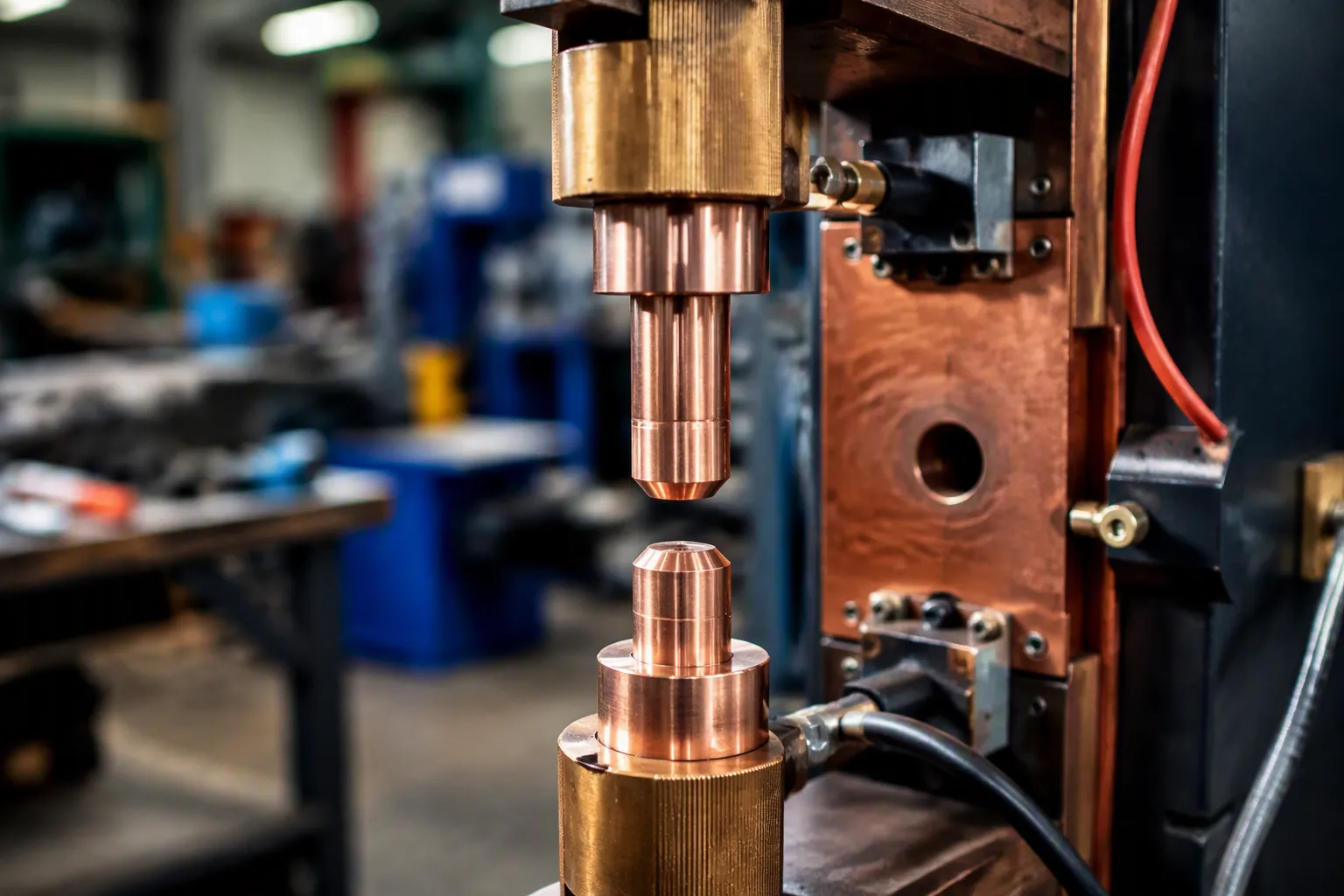
Resistance welding electrodes are the parts that carry electricity and press on metal pieces to join them. They create heat at the weld spot and help make steady, good welds. In car making, about 60% of all welds use resistance spot welding machines, which shows how important these parts are.
You depend on these electrodes for strong, repeatable welds. Their material and shape directly affect how well they work. This article explains how they work, their types, materials, and how to make them last longer.
Resistance welding electrodes carry electricity and push metal pieces together to make strong welds.
Pick the correct electrode material and shape to manage heat and keep weld quality steady.
Pick the electrode type that fits your welding method, like spot, seam, or projection welding.
Regularly reshape and replace electrodes to extend their life and keep weld quality.
Use the right force and current settings to prevent overheating and uneven wear.
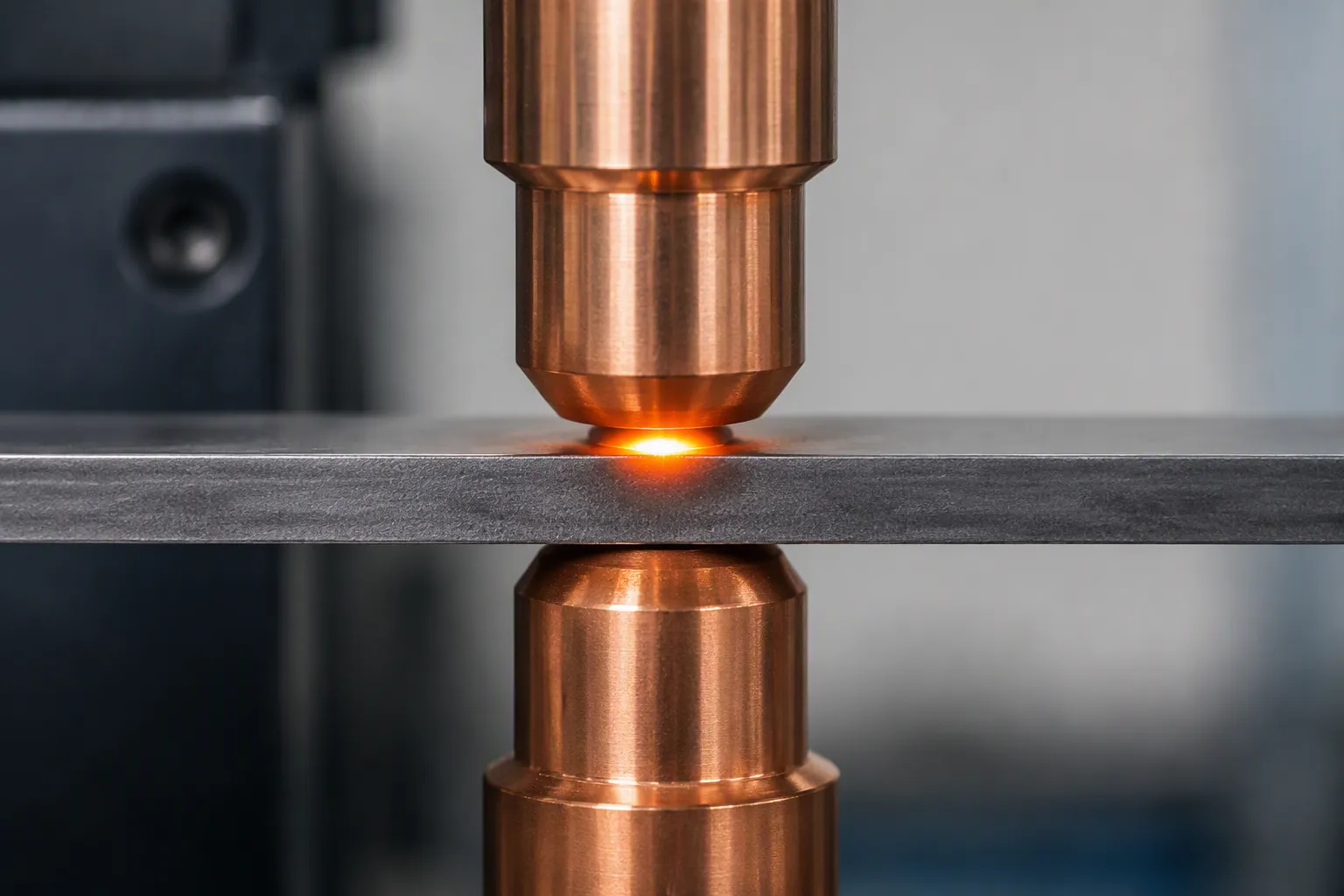
You depend on resistance welding electrodes to send both electrical current and mechanical force at the same time. The current moves through the electrodes into the metal piece, while force presses the electrodes against the metal. Together, these create heat where the electrode meets the workpiece. That heat melts the metal and forms a weld nugget. When the current stops, the force keeps the metal together until it hardens. This whole process takes less than a second. You need to pick the right electrode for your job to get steady, good welds.
Force does more than just hold the electrodes in place. It directly controls the contact resistance between the electrode and the workpiece. More force increases the contact area. That bigger area lowers the contact resistance. This lower value cuts down heat at the interface. This helps you manage the size of the weld nugget. If you use too little force, the interface heats up too fast right away. That can cause expulsion after the welding current starts. Expulsion weakens the weld and makes spatter. You must set the force correctly to get consistent results. The welding current also matters a lot. Higher current boosts heat, but only if the force gives the right contact resistance. You have to balance current and force to make a stable weld nugget. Correct force not only controls the weld but also helps the electrode last longer. Too much force can bend the electrode, while too little force leads to overheating and quick wear.
The material of the resistance welding electrodes affects how well current moves through them. Materials with high thermal conductivity, like copper alloys such as AMPCOLOY®, pull heat away from the contact zone quickly. This stops the electrode tip from getting soft and changing shape. A stable tip keeps a steady contact area. That steadiness ensures even current density across the weld. You get the same good weld quality every time. The right electrode material also makes the electrode last longer. When the tip stays cool, it wears less. That cuts down time for dressing and replacing.
The shape of the electrode face decides how current and pressure spread across the weld area. Common shapes are dome, flat, and radius. Each shape focuses current and pressure in a certain way. A dome-shaped electrode sends current to the center. This makes a smaller, deeper weld nugget. A flat face spreads current over a wider area. That gives a wider, shallower weld. You choose the shape based on your material thickness and the weld strength you need. For example, a radiused face works well for welding coated steels. It spreads pressure evenly and leaves fewer marks on the metal. The shape directly affects current density at the weld interface. A sharp radius gives high current density, which can go through thicker materials. A flatter face spreads the current, lowering the risk of overheating thin sheets.
The material properties of the electrode affect how well the shape holds up over time. High-conductivity copper alloys move heat away from the weld zone quickly. This stops the electrode face from overheating and changing shape. A stable face keeps even current distribution over many cycles. When the face stays in good shape, you get high weld quality every time. Coatings and surface treatments can improve conductivity and reduce wear. This makes the electrode last longer and cuts down on frequent dressing. You should check the electrode face often. If you see wear or shape changes, dress the electrode to bring back its original shape. Regular dressing restores the face and keeps current distribution even. This stops weld defects. Proper care keeps the electrode working the way it should.
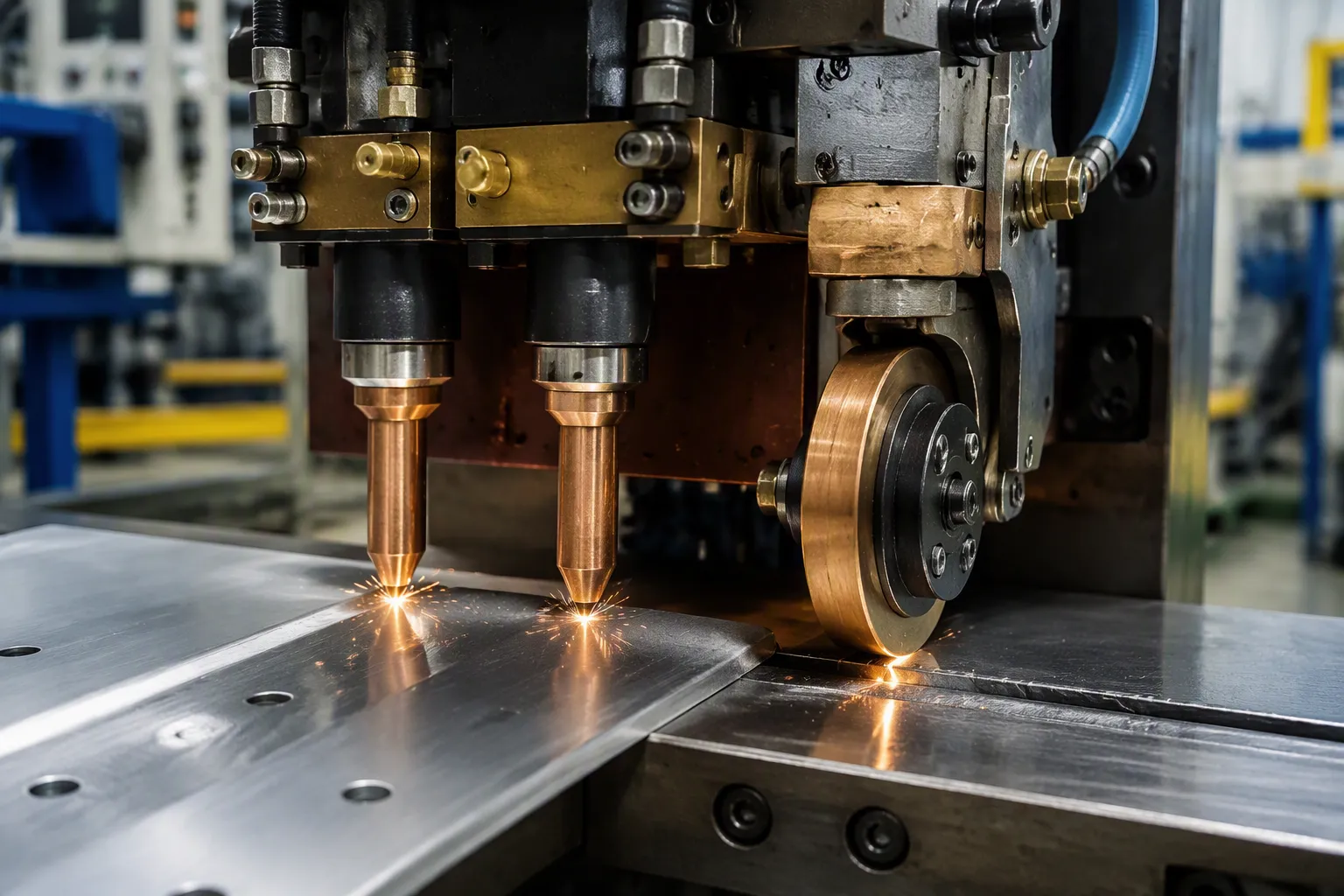
You will find several standard styles of resistance welding electrodes on the market. Caps, buttons, and single-point round shank electrodes cover most basic needs. Each style serves a specific purpose in different production environments. The right choice depends on your welding application, the materials you join, and the volume of work you handle. Understanding these options helps you make informed decisions for your shop floor.
Spot welding uses stationary copper alloy tips to create individual weld nuggets. You position the workpiece, make one weld, then move to the next location. This method works well for aerospace brackets and auto frames where you need high strength at specific points. Seam welding takes a different approach. It uses rotating wheel electrodes that roll across the workpiece. This creates a continuous seam or overlapping weld nuggets without stopping to reposition. This method suits fuel tanks and sealed enclosures where you need leak-tight joints.
Feature | Spot Welding | Seam Welding |
|---|---|---|
Electrode Type | Copper alloy tips (stationary) | Rotating wheel electrodes |
Weld Pattern | Individual weld nuggets | Continuous or overlapping seam |
Speed | High speed for point welds | Efficient for long welds |
Applications | Aerospace brackets, auto frames | Fuel tanks, sealed enclosures |
Strength/Seal | High-strength at points | Leak-tight, continuous joints |
The automotive industry relies heavily on copper alloy electrodes for assembling bodies and large components. These electrodes offer high electrical and thermal conductivity plus excellent wear resistance. You will also find tips and caps electrodes in mass production settings. Their interchangeable design allows quick replacement, which keeps assembly lines running without long pauses.
Projection welding uses electrodes with specially shaped faces to concentrate energy at predetermined points. The shape you choose directly affects your results.
Electrode Shape | Effect on Weld Strength | Effect on Weld Consistency | Effect on Weld Appearance |
|---|---|---|---|
Flat | Even current/pressure distribution; consistent strength on uniform projections | Best for regular, uniform projections | Produces smooth, flat weld surfaces |
Dome-shaped | Concentrates energy at projection center; creates stronger welds faster | Requires precise centering; offers flexibility for irregular projections | Leaves a noticeable indentation |
Cone-shaped | Penetrates projection effectively; creates deep, strong welds | Difficult to align; misalignment leads to uneven welds | Leaves a more pronounced indentation |
Stud electrodes often feature copper tungsten (10W) on the weld face. This material provides the necessary resistance and heat balance when welding copper parts. A copper electrode against copper will not work effectively. The tungsten-copper face solves this problem. These electrodes also have wrench flats for easy installation and removal. You can swap them quickly without special tools, which reduces downtime between production runs.
The weld face is made from RWMA Class 11 (75% tungsten, 25% copper) and is brazed onto the base material. This face is typically used for welding at higher pressure and heat common with projection welding.
Suppliers like RWElectrodes.com, T. J. Snow, and AMADA WELD TECH offer these products from brands such as CMW, Tuffaloy, and Pacific. You can find resistance welding electrodes for nearly any setup. Proper selection improves weld quality and extends electrode life. Matching the electrode type to your specific process ensures consistent production and fewer interruptions. Regular maintenance also extends electrode life and keeps your operation running smoothly.
Your choice of electrode materials directly controls heat management, current flow, and tool longevity. Two main categories dominate the market: copper-based alloys for general use and refractory metals for demanding applications.
Copper-based alloys, especially RWMA Class 2 materials, form the backbone of most welding operations. Class 2 alloy (CuCrZr) delivers a minimum electrical conductivity of 75% IACS. Pure copper offers about 100% IACS. The alloy trades a small amount of conductivity for much better strength and wear resistance. This balance makes Class 2 suitable for welding steel and stainless steel. The RWMA groups copper alloys into classes 1 through 4. Class 1 (zirconium copper) has the highest conductivity and works well for aluminum. Class 2 follows closely. Class 3 (cobalt-beryllium copper) offers higher strength but lower conductivity. Class 4 (beryllium copper) provides the highest hardness with the lowest conductivity among the four. You pick the class based on your material and the heat you need. Higher conductivity pulls heat away from the weld zone faster. This keeps the electrode tip cool and stable. A stable tip maintains even current density, which directly improves weld quality. It also extends electrode life by reducing thermal softening and deformation. Good thermal management lowers electrical resistance at the contact interface and protects the electrode during continuous welding.
When you weld coated steels or highly conductive materials like copper, standard copper alloys wear out too quickly. Refractory electrode materials solve this problem. Copper tungsten (10W) places a tungsten-rich face on the electrode. Tungsten melts at 3387°C, while molybdenum melts at 2610°C. These materials stay hard at high temperatures. The copper phase provides conductivity, while the tungsten phase resists wear. At room temperature, the friction coefficient stabilizes around 0.8. At 300°C, a protective oxide layer forms, dropping the coefficient to about 0.45 and reducing wear. RWMA classes 10 through 14 cover these materials. Class 10 (45% Cu / 55% W) has 47% IACS conductivity. Class 11 (25% Cu / 75% W) offers 44% IACS. Class 12 (20% Cu / 80% W) delivers 40% IACS. Classes 13 and 14 use pure tungsten. These materials serve as facings brazed onto a copper base. You also find micro resistance welding electrodes made from these alloys. Manufacturers custom-make them to match any electrode holder design, particularly for battery welding. The right refractory metal selection boosts electrode life significantly when you work with high-heat processes. Proper selection of electrode materials for these applications helps maximize your return on each tool. The heat resistance of tungsten-based facings directly contributes to longer electrode life in demanding production runs.
The materials and design you pick for electrodes decide how long they will last. Start by looking at current capacity. The electrode must handle the welding current without getting too hot. Also check how it cools. Water-cooled electrodes stay cooler and last longer than air-cooled ones. Where the cooling tube sits matters a lot. Research by Roger Hirsch at Unitrol Electronics found that a cooling tube placed one inch back causes big problems after 8,000 welds. Tensile strength falls 27.6%, weld nugget size shrinks 18.2%, and electrode face size grows 42.0%. Make sure the water tube goes all the way into the tip. Cut the tube end at a 45-degree angle so water flows well. Use straight tips when you can. Offset tips cool less effectively. If you must use an offset, choose one with an internal water tube.
Wear resistance also helps you choose. Different workpiece materials wear electrodes at different speeds. Uncoated mild steel gives you 10,000 to 20,000 welds per electrode. Galvanized steel lowers that to 3,000 to 6,000 welds. Aluminum alloys wear electrodes the fastest, lasting only 1,000 to 3,000 welds. Your welding job decides which electrode material you need. Match the electrode to the task, and you greatly extend the life of resistance welding electrodes.
Electrodes wear down as you use them. Clean and dress them on a regular schedule. For galvanized sheets, dress electrodes every 200 to 500 welds to bring back the original tip shape. Follow a simple routine. Stop the weld cycle and let the tip cool down. Look at the face to see if it needs dressing or full replacement. Line up the dressing tool with the electrode axis. Use light, even pressure to restore the original radius or flat shape. Remove loose copper bits. Run a test weld and check nugget size before you start production again.
Dress electrodes every 200–500 welds (typical for GI sheets) to restore the original tip profile periodically.
Watch for signs that tell you it is time to replace the electrode. Flat or uneven tips mean trouble. Dirty tips covered with residue need care. Mushroom-shaped tips show overheating. Deep marks or rough surfaces point to damage. Misaligned tips cause uneven welds. A tip shorter than the opposite electrode needs replacement. Any damage that changes contact area leads to inconsistent welds, sparks, or weak joints.
Under the best conditions, electrodes wear evenly with no heat marks. You get this by using the right pressure and current settings. Correct force keeps contact resistance at the proper level. Proper current stops overheating. Regular care keeps weld quality high and makes electrodes last longer. Replace tips quickly when damaged to avoid costly production delays.
Resistance welding electrodes form the vital connection between your welding machine and the metal pieces you join. Their function, types, and materials directly shape your weld quality. You cannot achieve consistent results without matching the right electrode to your specific application.
Proper selection and regular maintenance maximize the life of resistance welding electrodes. You extend electrode life when you dress tips regularly and replace damaged ones quickly. Correct pressure and current settings prevent overheating and uneven wear.
Every welding operation benefits from expert guidance. Consult a welding specialist or explore manufacturer resources when choosing electrodes for unique applications. Their knowledge helps you optimize performance and reduce downtime.
RWMA Class 2 copper alloy. It has good electrical flow and is strong and durable. This makes it great for welding steel and stainless steel in factories.
For galvanized steel, fix the tip every 200 to 500 welds. This keeps the tip shape right and weld quality steady. Doing this often makes electrodes last longer and stops weak joints.
Common causes are too much heat, wrong alignment, and poor cooling. If the cooling tube is too far back, the weld strength drops after 8,000 cycles. Good setup with right pressure stops these problems.
You can, but results differ. Some metals wear electrodes faster. Uncoated steel gives 10,000 to 20,000 welds. Aluminum may need a new electrode after 1,000 to 3,000 welds.
Copper tungsten faces handle high heat better than regular copper. They stay hard when very hot. This is good for welding copper or coated steel in tough jobs.


