


Views: 0 Author: Site Editor Publish Time: 2026-03-23 Origin: Site


Spot welding is a key process in industries like automotive and electronics. It joins metal pieces using heat and pressure generated by an electric current. At the heart of this process are spot welding electrodes, crucial for transferring current and applying pressure.
In this article, we'll explore the role of spot welding electrodes, their materials, and their applications. You’ll learn how these electrodes contribute to high-quality, efficient welds.
Spot welding is a resistance welding process used to join two or more metal sheets by applying heat and pressure at localized points. The heat is generated by electrical resistance as the current flows through the materials. The welding machine uses copper electrodes to create this resistance at the contact points. The metal melts and forms a strong bond at the interface. The process is fast and cost-effective, making it ideal for mass production in industries like automotive manufacturing, where high-strength welds are required without the need for additional filler materials.
The spot welding electrodes are critical components in the spot welding process. They conduct the electrical current needed to create heat at the weld points and apply pressure to the workpieces. Typically made from copper alloys, electrodes need to be durable and capable of withstanding the heat and pressure generated during the welding process. The quality of the weld is largely influenced by the efficiency of the electrodes in conducting current and maintaining the proper amount of pressure on the metal sheets. Without properly functioning electrodes, the welding process may fail, resulting in weak or failed joints.
Several factors influence the outcome of a spot weld, with the primary ones being pressure, current, and welding time.
1. Pressure: Too little pressure can result in weak welds, while excessive pressure can cause the metal to thin or crack.
2. Current: The right amount of current must be applied based on the material and thickness of the metal. For example, thicker materials require more current to generate sufficient heat.
3. Welding Time: The duration of the current flow is another critical factor. The longer the current is applied, the more heat is generated, which may lead to overheating and burn-through if not properly controlled.
By carefully balancing these parameters, spot welders can ensure a strong, consistent weld every time.
Spot welding electrodes come in various shapes and sizes, each suited to specific applications. Some common types include:
● Dome-shaped Electrodes: These electrodes have a rounded tip, allowing for precise control over the heat and pressure applied at the weld site. They are ideal for thin metals.
● Flat-faced Electrodes: These electrodes are used for thicker materials or larger welding areas as they distribute heat over a wider surface, creating a larger weld nugget.
● Offset Electrodes: These are designed with an angled or bent shape to access hard-to-reach areas, commonly used in automotive manufacturing where welding in tight spaces is required.
Each type of electrode is used depending on the thickness and shape of the material being welded.
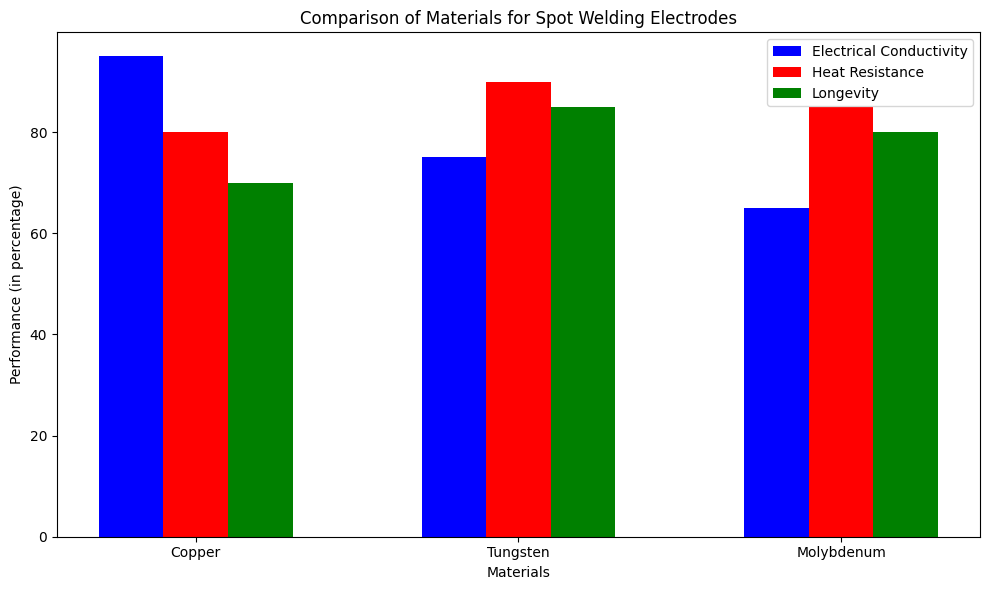
The material used for spot welding electrodes is crucial in determining their performance. The most common materials include:
● Copper: Known for its excellent electrical conductivity, copper is the most widely used material for electrodes in spot welding. It allows efficient current flow, minimizing energy losses and maximizing heat generation.
● Tungsten and Molybdenum: For high-current applications, tungsten and molybdenum electrodes are used due to their ability to withstand extremely high temperatures without melting. These materials are particularly useful for welding metals like copper, which have high thermal conductivity.
● Copper Alloys: In some cases, copper alloys are used, offering a balance of conductivity, strength, and durability for various applications.
The choice of material depends on the specific requirements of the welding process, such as the type of metal being welded and the expected heat levels.
The tip of the spot welding electrode plays a significant role in the quality of the weld. The geometry of the tip affects both the current flow and heat distribution at the welding site. Properly maintaining the electrode tip is essential for consistent results:
● Sharpening the Tips: Over time, the tips wear down, affecting the efficiency of the weld. Regularly sharpening the electrode tips ensures proper contact and effective heat generation.
● Tip Geometry: The shape of the tip determines how concentrated the heat is. A sharp tip focuses heat more precisely, while a rounded tip spreads the heat over a larger area.
Maintaining the correct tip geometry and sharpness is vital for achieving strong, reliable spot welds.
The primary function of spot welding electrodes is to conduct electrical current through the metal sheets being welded. When the electrodes are pressed onto the metal, the resistance at the contact points generates heat, which melts the metal and forms a weld. The efficiency of this process depends on the conductivity of the electrodes. Copper, being an excellent conductor of electricity, allows the welding current to flow with minimal resistance, ensuring that the right amount of heat is generated at the weld site.
In addition to conducting electricity, electrodes apply pressure to hold the workpieces together. This pressure ensures a good electrical contact and helps fuse the molten metal into a solid joint. The electrodes also play a critical role in dissipating heat. Due to their high thermal conductivity, they absorb excess heat and prevent it from damaging the workpieces or the machine components. Proper pressure and heat dissipation are crucial for maintaining the integrity of both the weld and the electrodes.
Cooling is an essential part of the spot welding process. After the welding current is turned off, the electrodes must dissipate the residual heat to prevent overheating. Cooling systems, such as water-cooling or air-cooling, are often used in spot welders to manage the temperature of the electrodes. Additionally, regular maintenance, such as cleaning and sharpening the electrode tips, helps ensure that the electrodes function at their best and extend their lifespan.
Spot welding electrodes are widely used in the automotive industry to join body panels, chassis components, and other metal parts. The process is particularly suited for high-volume manufacturing environments, such as automated assembly lines, where precision and efficiency are paramount. Spot welding electrodes are capable of joining multiple sheets of metal at once, making them ideal for producing car body structures that need to be both strong and lightweight.
Spot welding is also used in electronics manufacturing, particularly in the production of battery cells, connectors, and circuit boards. The process allows for precise, low-temperature welding, which is critical for protecting sensitive electronic components. Beyond electronics, spot welding is used in various other sectors, including the medical and construction industries, where strong, reliable welds are needed for manufacturing implants, medical devices, and structural components.
In modern manufacturing, spot welding is often automated using robotic systems. These systems can execute precise welding operations at high speeds, improving productivity and consistency. Automated spot welding is particularly useful in industries like automotive manufacturing, where robots can handle repetitive tasks with minimal human intervention, leading to faster production rates and reduced costs.
Spot welding offers several advantages over other welding methods. It is fast, cost-effective, and requires minimal post-processing. The ability to automate the process further increases its efficiency in high-volume manufacturing. Spot welding is also versatile, capable of joining a wide range of metals, including steel, aluminum, and nickel alloys. Additionally, the localized heat generated by spot welding minimizes the risk of warping or distorting the surrounding material.
Despite its many advantages, spot welding does have some challenges. One of the main issues is electrode wear, which can affect weld quality over time. Misalignment of the electrodes can lead to poor welds, while the material being welded can also impact the results. For example, metals with low electrical resistance or high thermal conductivity, like aluminum and copper, require special welding parameters and electrodes to ensure successful welds.
Spot welding electrodes are essential for joining metal sheets effectively. Whether in automotive, electronics, or other industries, the right electrodes enhance weld strength, quality, and cost-effectiveness. Proper selection, maintenance, and control of parameters are crucial for reliable, high-quality welds. Understanding the role of these electrodes helps manufacturers optimize their processes and improve product quality.
At Guangzhou Yizhunxing International Trade Co., Ltd., their spot welding electrodes provide high efficiency and reliability, ensuring superior welding results for various industrial applications.
A: A spot welding electrode is a tool used in spot welding to transfer electrical current and apply pressure to fuse metal pieces together.
A: A spot welding electrode conducts current through metal sheets, generating heat at the weld point. It also applies pressure to hold the pieces in place while they melt and fuse.
A: Copper is used for spot welding electrodes due to its excellent electrical conductivity, allowing efficient current transfer and heat generation.
A: The performance of a spot welding electrode depends on pressure, current, electrode material, and tip geometry. Proper maintenance and calibration are also crucial for consistent weld quality.
A: The lifespan of a spot welding electrode depends on material wear, welding frequency, and proper maintenance. With proper care, they can last for several years.
A: Spot welding electrodes are commonly used to join metals like steel, aluminum, and nickel alloys, with the material choice affecting electrode performance.


