


Views: 0 Author: Site Editor Publish Time: 2026-09-30 Origin: Site


Electronics manufacturers face intense production pressure today. They must aggressively miniaturize assemblies while maintaining exceptionally high yield rates. Managing thermal stress on increasingly sensitive components remains a massive engineering challenge. High-density assembly demands a strict structural choice. You can adopt bulk thermal processing through continuous convection ovens. Alternatively, you can utilize localized, pressure-assisted thermal transfer via pulsed heat systems. Choosing the incorrect thermal method quickly causes substrate delamination, warped rigid boards, or catastrophically damaged flex circuits. We will thoroughly explore the fundamental mechanical differences between these two foundational soldering methods. You will learn exactly how to evaluate your production scale, component thermal tolerances, and essential tooling requirements. This completely evidence-based comparison directly helps manufacturing engineers match the exact technology to their specific assembly needs.
Reflow Soldering relies on continuous convection heating for high-volume, mass-SMT assembly but risks thermal damage to sensitive substrates.
Hot Bar Soldering utilizes localized pulsed heat and physical pressure, making it the industry standard for fragile flex-to-rigid (FPC-to-PCB) connections.
Process scalability in hot bar systems heavily depends on consumable quality, specifically the thermal uniformity of the hot bar heater tip.
Choosing between the two requires calculating the Total Cost of Ownership (TCO), factoring in capital equipment costs versus ongoing consumable replacement and maintenance.
Engineers must strictly define a thermal budget for every assembly. You must know exactly how much heat your components can survive. Excessive thermal exposure guarantees immediate delamination or delayed field failure. Understanding how heat transfers into your product dictates your entire manufacturing strategy.
Reflow soldering operates via conveyor-driven thermal profiling. Boards pass slowly through multiple distinct oven zones. These carefully controlled zones include pre-heat, soak, reflow, and cooling stages. The oven heats the entire printed circuit board uniformly. It effectively melts solder paste across hundreds of distinct pads simultaneously. Convection fans circulate hot air continuously to ensure consistent temperatures across the entire substrate. This bulk heating method works exceptionally well for standard rigid materials. However, it subjects every single board component to peak soldering temperatures.
Hot bar soldering uses a completely different thermal approach. It deploys a closed-loop, pulsed-heat thermode. The system applies immediate, highly localized heat directly to a specific joint. It simultaneously applies finely controlled physical pressure. A specialized power supply pulses electrical current rapidly through the thermode. It ramps up to the target reflow temperature in milliseconds. A critical structural advantage happens during the subsequent cooling phase. The thermode actively cools down while remaining pressed firmly against the joint. This physical pressure perfectly prevents parts from shifting. It minimizes dangerous thermal exposure to adjacent sensitive components. It ensures a highly reliable, coplanar bond.
Different assembly methods empirically succeed in distinct component categories. We must match the thermal technology directly to the physical substrate capabilities. Doing so maximizes yield and prevents costly rework.
You should strictly mandate reflow soldering for standard rigid printed circuit boards. It excels when populating high-density surface mount technology (SMT) components. Ball grid arrays (BGAs), quad flat no-leads (QFNs), and miniature passive chips handle uniform bulk heating perfectly. Reflow definitively dominates high-mix, continuous throughput manufacturing environments. You simply manage component variance purely via software-driven thermal profiles. Engineers easily select a different oven recipe for a different board geometry. Production lines run continuously without changing physical tooling.
Conversely, you must mandate hot bar soldering for delicate flexible circuits. It remains the dominant choice when utilizing an FPC hot bar soldering tip. Manufacturers rely on this tooling to join thin flexible printed circuits to rigid boards or sensitive glass displays. Standard reflow ovens would instantly melt or deform these fragile polyimide flex materials. Heat-sensitive assemblies always require localized pulsed heat. Coaxial cables and anisotropic conductive film (ACF) bonding cannot survive mass convection. Finally, consider ultra-fine-pitch alignments. When pad pitch drops significantly, printed solder paste easily bridges. Hot bar systems apply continuous physical pressure during the precise solder phase transition. This mechanical pressure maintains strict coplanarity. It prevents microscopic electronic components from floating or misaligning.
Analyzing hidden process variables ultimately dictates your true manufacturing repeatability. You must carefully evaluate specific equipment features against tangible production outcomes. Each method introduces distinct operational constraints.
Reflow systems strictly impose severe setup constraints on your facility. They require precise solder flux management across the entire board surface. Many high-reliability aerospace or automotive setups consume massive amounts of nitrogen gas. Nitrogen safely displaces oxygen to prevent dangerous solder oxidation. Engineers must execute rigorous, time-consuming oven profiling. Poor thermal profiles quickly cause brittle cold solder joints. They also cause tombstoning, where tiny passive components stand up vertically.
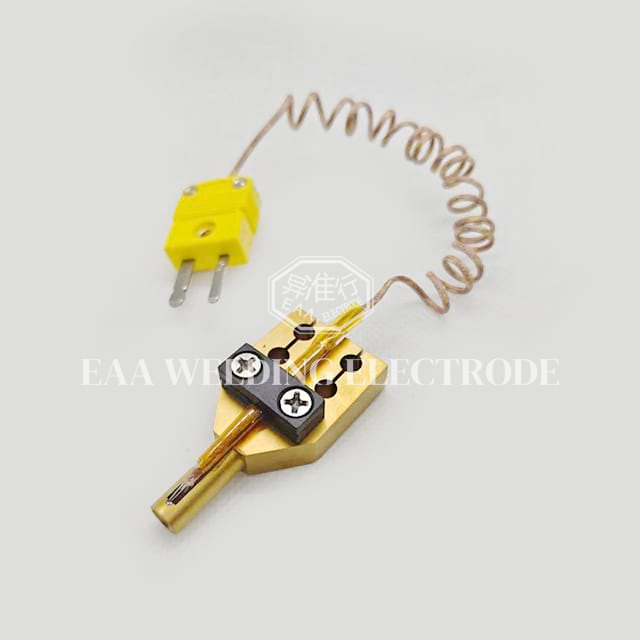
Hot bar soldering introduces entirely different mechanical constraints. The entire assembly process hinges strictly on the geometric quality and planarity of the Hot Bar Heater Tip. The precise engineering behind a thermal bonding heater tip dictates completely uniform heat distribution. Tooling experts usually machine these critical tips from highly specialized materials. They frequently use durable molybdenum or titanium alloys. These unique metals offer rapid electrical heating and resist liquid solder wetting. Thermocouple placement inside the thermode remains fundamentally vital. The tiny sensor must read the exact temperature directly at the bonding interface.
Implementation reality demands strict tooling standardization. You should standardize on highly repeatable thermode geometries across your entire factory floor. For example, explicitly specifying a hot bar heater tip #6002 for specific flex pitch requirements completely prevents line-down situations. It drastically reduces dangerous process variation across multiple global manufacturing locations. Your machine operators can swap standardized tips quickly. They do this without constantly recalibrating downward pressure profiles manually.
We must transparently break down deployment hurdles and financial requirements. Implementation involves weighing initial capital expenditure directly against ongoing operating expenditure. You must fully grasp these financial realities before upgrading your line.
Reflow ovens demand massive initial capital expenditure. They require a remarkably large factory footprint. They continuously consume significant industrial electrical energy. Extensive exhaust ventilation systems add further facility infrastructure costs. However, they easily process thousands of densely populated boards per hour. They require virtually zero manual intervention during normal operation.
Hot bar stations require much lower initial capital expenditure. They occupy remarkably small footprints on standard factory workbenches. However, they naturally demand continuous operating expenditure for specialized consumable thermodes. They also require dedicated manual or semi-automated alignment tooling. Each new product geometry often requires custom mechanical fixtures.
Risk mitigation strategies differ completely between both methods. Reflow profiling errors lead directly to catastrophic batch failures. A single wrong temperature setting can destroy hundreds of expensive assemblies before operators even notice. Hot bar systems face entirely different physical risks. Uneven tip wear inherently causes severe thermal gradients. A worn, unlevel tip applies highly unequal pressure. This creates dangerously weak bonds or traps active flux. You must mitigate this by aggressively vetting a highly reliable hot bar tip supplier. They must utilize extremely stringent quality control. Predictable factory lead times remain absolutely essential. Reliable global suppliers effortlessly prevent costly production bottlenecks.
Table: Capital and Operational Comparison
Parameter | Reflow Soldering | Hot Bar Soldering |
|---|---|---|
Initial CapEx | Extremely high (large industrial ovens). | Relatively low (compact desktop stations). |
Factory Footprint | Massive (15+ feet long). | Minimal (standard workbench size). |
Energy Consumption | High, continuous draw. | Low, pulses only during bonding. |
Primary OpEx | Nitrogen gas, high electricity, flux. | Consumable heater tips, custom fixtures. |
Primary Risk | Catastrophic whole-batch thermal failure. | Uneven bonds due to poor tip planarity. |
Production engineers need a highly structured, step-by-step evaluation matrix. You can use this exact logical framework to confidently shortlist your assembly process. It removes guesswork entirely.
First, strictly assess your expected production volume. Continuous high-volume SMT production defaults instantly to reflow processing. You cannot efficiently populate 500 microscopic components on a motherboard using localized heating. Conversely, low-volume batch jobs or selective sensitive joins default immediately to hot bar.
Next, accurately assess component pitch and physical pressure requirements. Liquid solder naturally expands and contracts heavily during phase transitions. If the joint inherently requires physical compression during cooling to prevent lifting, hot bar becomes absolutely mandatory. Flexible flat cables (FFC) and delicate flex tails naturally try to curl up when heated. Pulsed heat systems mechanically hold them perfectly flat until the solder fully solidifies.
Finally, you must execute clear next-step actions. We highly recommend setting up a rigorous Design of Experiments (DoE) before full deployment. Follow these essential steps closely:
Start your evaluation process with basic prototype joint testing on inexpensive scrap boards.
Evaluate distinct localized thermal profiles using embedded microscopic thermocouples.
Conduct destructive shear and pull tests on multiple test coupons.
Test distinct heater tip geometries to securely find the optimal thermal transfer rate.
Document all observed failure modes comprehensively to train your quality assurance team.
Reflow soldering clearly remains the undisputed king of bulk SMT processing. It handles high-density, rigid boards with unmatched speed and efficiency. Conversely, hot bar soldering represents the precision scalpel required for modern flex-rigid assemblies. It safely and reliably processes thermally fragile components.
Do not treat localized soldering as a mere engineering afterthought. The long-term success of any pulsed heat process links inextricably to the initial engineering of the tooling itself. Poor physical tooling universally guarantees poor production yields.
Audit your current manufacturing yield rates on flexible assemblies today. Consult directly with specialized tooling experts immediately. They will actively help you specify the exact thermode geometry required for your next major production run.
A: No. Hot bar is a selective, highly localized process specifically designed for fragile joints like FPCs or coaxial cables. It remains far too slow and completely unviable for mass-populating an entire rigid PCB.
A: Lifespan depends heavily on tip material, applied mechanical pressure, peak temperature profile, and flux corrosivity. It typically ranges directly from tens of thousands to hundreds of thousands of cycles before re-machining or complete replacement becomes necessary.
A: Generally, no. Because the system applies heat highly localized and rapidly under direct physical pressure, natural oxidation is minimized. This unique mechanism makes expensive nitrogen shielding largely unnecessary for most hot bar manufacturing applications.


