


Views: 0 Author: Site Editor Publish Time: 2026-10-11 Origin: Site


Frequent electrode replacement goes far beyond a simple consumable expense. It quietly drains manufacturing profitability through unexpected machine downtime, increased tip dressing cycles, and rejected parts. Modern production demands constantly shift toward thicker gauges and heavily coated steels. These tougher materials easily push a standard Spot Welding Electrode past its natural thermal and mechanical limits. When tips degrade prematurely, you face frustratingly inconsistent weld nugget quality.
This article delivers an evidence-based framework for diagnosing rapid tip wear on your production floor. You will learn how to evaluate advanced alloy upgrades to perfectly match your specific application. We will also cover how to optimize your operational parameters to maximize the lifespan of your chosen materials.
Heat and Pressure Dynamics: Thermal softening and mechanical deformation ("mushrooming") are the primary drivers of premature wear.
Material Mismatch: Standard copper degrades rapidly when exposed to modern coated metals like galvanized steel due to zinc alloying and sticking.
Alloy Upgrades: Transitioning to a chromium zirconium copper electrode or an alumina dispersed copper electrode significantly increases welds-per-tip and reduces total cost of ownership (TCO).
Holistic Evaluation: Extending lifespan requires a combination of precise metallurgy, optimized water cooling, and partnering with a compliant, traceable supplier.
Understanding the full impact of rapid wear requires looking past the purchasing department. The true financial and operational damage happens directly on the assembly line.
Frequent tip dressing and mandatory replacements completely disrupt continuous manufacturing flows. Every time a technician stops a machine to swap a tip, production halts. This repeated downtime directly degrades your Overall Equipment Effectiveness (OEE). The cumulative hours lost to reactive maintenance quickly erase any savings gained from buying cheaper, lower-quality materials. Automated cells suffer even more, as robots sit idle while waiting for manual intervention.
Wear fundamentally changes the geometry of your contact face. A flattened tip spreads the electrical current over a much wider surface area. This expansion severely decreases current density. Lower current density fails to generate enough localized heat, leading directly to weak or undersized weld nuggets. High scrap rates follow immediately. You end up wasting expensive raw materials and risking catastrophic joint failures in the field.
You cannot improve what you do not measure. Establishing strict baseline metrics is essential for evaluating performance.
Continuous Welds: Track the exact number of acceptable welds achieved between required dressing intervals.
Hardness Retention: Measure how well the alloy maintains its structural hardness after sustained exposure to elevated temperatures.
Nugget Consistency: Monitor the variation in weld nugget diameters across a full shift.
Common Mistake: Relying solely on visual inspection to determine when a tip needs changing. Visual checks are highly subjective and often lead to running degraded tips far longer than you should.
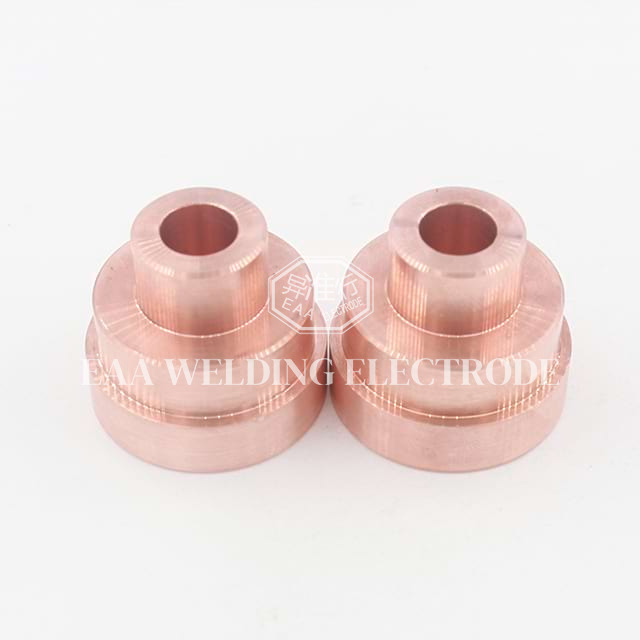
Diagnosing failure requires examining the intense physical environment at the weld zone. Heat, pressure, and chemistry all attack the metal simultaneously.
A basic Copper Electrode possesses strict physical limits. Under continuous high-current cycles, pure metal absorbs massive amounts of heat. If the internal temperature surpasses the annealing point, the structural integrity collapses. The material softens rapidly.
Cooling failures act as the primary catalyst for this thermal overload. Restricted water flow traps boiling water inside the shank. Incorrect coolant tube placement prevents cold water from reaching the critical internal face. Insufficient chilling capacity across the entire plant leaves the equipment starved for relief. You must verify cooling efficiency constantly.
Best Practice: Ensure your internal water tube is cut at a 45-degree angle. Place it no more than a quarter-inch away from the bottom of the cooling hole to maximize heat transfer.
Industrial applications apply thousands of pounds of compressive force. "Mushrooming" occurs when this repetitive mechanical impact forces the contact face to flatten and spread outward.
This physical deformation initiates a destructive cycle. As the tip area increases, the current density drops proportionally. To compensate and achieve a passable weld, operators typically increase the current. Pushing higher current generates even more heat. The extra heat softens the metal further, accelerating the mushrooming effect. You cannot win this battle without addressing the material strength.
Metallurgical contamination destroys tips faster than heat or pressure alone. This becomes painfully obvious when welding galvanized steel.
Galvanized steel features a protective zinc coating. Zinc melts at a significantly lower temperature than the underlying steel. During a cycle, this liquid zinc aggressively attacks the copper tip. The two metals alloy instantly, creating a brittle brass layer directly on the contact face. This brass layer causes severe sticking, deep surface pitting, and rapid degradation. Tiny pieces of the tip literally tear away with every cycle.
Upgrading your metallurgy is the most direct way to combat rapid wear. Different applications demand specific material properties.
Spot Welding Alloy Comparison
Alloy Type | RWMA Classification | Primary Feature | Best Application |
|---|---|---|---|
Pure Copper | Class 1 | Maximum conductivity | Aluminum and magnesium alloys |
Chromium Zirconium Copper | Class 2 | High hardness and annealing threshold | Bare steels, general manufacturing |
Alumina Dispersed Copper | Class 20 | Resists recrystallization at high heat | Galvanized steel, high-heat applications |
This alloy represents the industry-standard upgrade for most general manufacturing environments. It carefully balances high electrical conductivity with superior hardness. The addition of chromium and zirconium creates a material that boasts a significantly higher annealing temperature compared to pure copper.
A chromium zirconium copper electrode handles heavy continuous duty cycles on bare steels beautifully. It strongly delays the onset of mushrooming under high mechanical force. Operations that adopt this material see an immediate extension in the intervals between required tip dressings. It provides an excellent balance of durability and reasonable unit cost.
Some applications require extreme solutions. This highly engineered alloy features microscopic aluminum oxide particles dispersed uniformly throughout the copper matrix. These particles act as physical barriers at the microscopic level. They prevent the metal from recrystallizing, even when pushed near the actual melting point of copper.
You need this material for high-heat applications and heavily coated materials. It virtually eliminates sticking issues when processing zinc-coated steels. The alloy retains its structural hardness at extreme temperatures where others fail instantly. While it carries a higher initial unit cost, it offers the highest return on investment by drastically cutting machine downtime.
Simply buying better metal does not guarantee success. You must adjust your operational habits to extract the full value from an upgrade.
Never assume you can drop a new alloy into a machine and press start. Upgraded materials possess slightly different electrical and thermal conductivities. If you use legacy current and time settings, you risk under-heating or over-heating the joint.
Higher resistance alloys often require slight parameter adjustments. You might need to adjust your baseline current up or down by small percentages. Always run a comprehensive series of test coupons. Cut and etch these coupons to verify nugget penetration before authorizing full production runs.
Waiting for a tip to show visible wear is a reactive strategy that guarantees quality failures. You must advocate for strict, preventative dressing intervals.
Use production data to define these schedules. Determine exactly how many cycles a tip can perform while keeping nugget sizes within tolerance. Set your automated dressers or instruct manual operators to dress the face right before that limit is reached. Preventative dressing removes minimal material while perfectly restoring the contact geometry.
Common Mistake: Dressing away too much material per cycle. Proper preventative dressing requires only a light cut to expose fresh metal and restore the face angle.
Even the strongest alloy will fail prematurely if subjected to uneven mechanical forces. You must verify proper alignment across your equipment daily.
The upper and lower tips must meet perfectly parallel to each other. They must apply force perpendicularly to the sheet metal. Any angular misalignment forces one edge of the tip to bear the entire compressive load. This creates severe, uneven wear patterns. Use specialized alignment tools to check your setup regularly. Verify your cylinder pressures match the requirements of your metal thickness.
Your materials are only as reliable as the company manufacturing them. Partnering with the right vendor is critical for long-term stability.
Do not accept vague promises regarding material composition. You must insist on formal material test reports (MTRs) for every batch you purchase. These documents verify the exact chemical percentages and physical properties of the alloy.
Reject any vendor offering generic "Class 2" products without proper chemical verification. Poorly mixed alloys contain voids and inconsistent grain structures. Complete metallurgical traceability prevents mysterious early failures on your production line.
Assess how your partner actually makes their products. Cold-heading typically produces a far superior internal grain structure compared to simple machining. The cold-forming process aligns the grain flow with the shape of the tip, vastly improving its structural integrity.
Ask a potential spot welding electrode supplier about their specific manufacturing techniques. Consistent manufacturing processes guarantee that the thousandth tip performs exactly like the first one.
A great product is useless if you cannot get it when you need it. Evaluate their inventory depth carefully. Ask about their standard lead times during peak demand seasons.
Your vendor must demonstrate the ability to scale alongside your production growth. A resilient supply chain acts as an insurance policy for your operation. It prevents catastrophic line stops caused by missing consumable parts.
Shift your mindset: Move your operation away from reactive maintenance and embrace proactive material selection.
Focus on ROI: Accept that advanced alloys carry a higher upfront cost, but recognize that the massive reduction in downtime yields a rapid return on investment.
Establish baselines: Audit your current lifespan metrics to fully understand your true operational losses.
Seek expertise: Consult with a trusted metallurgy expert to identify the exact material upgrade required for your tough applications.
Enforce alignment: Maintain strict mechanical alignment and preventative dressing schedules to protect your newly upgraded materials.
A: Galvanized plates feature a zinc coating. Zinc melts at a lower temperature than the underlying steel. During a cycle, this liquid zinc aggressively alloys with copper. This reaction creates a sticky, brittle brass layer on the contact surface. To prevent this severe degradation, we highly recommend transitioning to an alumina dispersed alloy. It actively resists zinc buildup and greatly extends operational life.
A: No, you should avoid using legacy settings. Upgraded alloys possess differing electrical and thermal conductivities compared to pure copper. You will typically require minor adjustments to your baseline current, weld time, and applied pressure. Proper recalibration guarantees you generate the correct heat profile for a structurally sound weld.
A: Dressing frequency varies widely across different facilities. It depends entirely on your material thickness, coating type, and specific alloy choice. However, you must manage it via a strict preventative schedule. Base your intervals on collected production data rather than waiting for visual failure. This proactive approach maintains perfectly consistent nugget quality.


