


Views: 0 Author: Site Editor Publish Time: 2026-08-30 Origin: Site


The profitability of your resistance welding operation relies directly on minimizing downtime. You must maximize weld consistency to keep assembly lines moving efficiently. The choice of electrode material and geometry remains the primary variable controlling thermal dynamics. It ultimately dictates current density, heat dissipation, and tip lifespan. Selecting the wrong electrode leads to rapid mushrooming and frustrating workpiece sticking. You will inevitably face inconsistent weld nuggets and excessive cap replacement frequencies. These hidden defects destroy production schedules and compromise structural integrity.
This guide breaks down standard electrode materials and recognized RWMA (Resistance Welding Manufacturing Alliance) classifications. We will explore the exact engineering criteria required to match Resistance Welding Electrodes to specific base metals. You will discover practical strategies to optimize tooling setups and prevent premature degradation.
Resistance welding electrodes are categorized primarily into Copper Alloys (RWMA Group A) for standard metals and Refractory Metals (RWMA Group B) for highly conductive or exotic workpieces.
Workpiece material dictates the electrode choice: you must balance the electrical conductivity and high-temperature hardness of the electrode against the thermal properties of the base metal.
RWMA Class 2 (Copper-Chromium or Copper-Chromium-Zirconium) is the industry standard for most cold-rolled and high-strength steel applications.
Electrode geometry (cap profile) and water-cooling efficiency are as critical as material composition for preventing premature thermal degradation.
Electrodes function as the absolute core of the resistance welding process. They perform three critical operations simultaneously during every single weld cycle. First, they conduct massive electrical current into the workpiece. This current often exceeds 10,000 amps. Second, they apply precise mechanical forging force. This pressure consolidates the molten joint before it cools. Third, they rapidly dissipate intense heat away from the weld interface. Failing in any of these functions results in a structurally deficient weld.
We evaluate tooling success using three primary operational criteria:
Weld Quality: You need a highly consistent nugget diameter. Penetration depth must meet strict engineering tolerances across thousands of cycles.
Operational Scalability: Measure the exact number of successful welds per tip. You must track this metric before tip dressing or complete replacement becomes necessary.
Defect Prevention: Your setup should actively minimize surface expulsion. It must prevent sticking and avoid detrimental metallurgical contamination on the outer metal skins.
Operators sometimes focus purely on electrical output and forget the electrode acts as a primary heat sink. Insufficient heat extraction ruins the cap profile rapidly. Proper thermal management remains crucial for maintaining long-term weld quality.
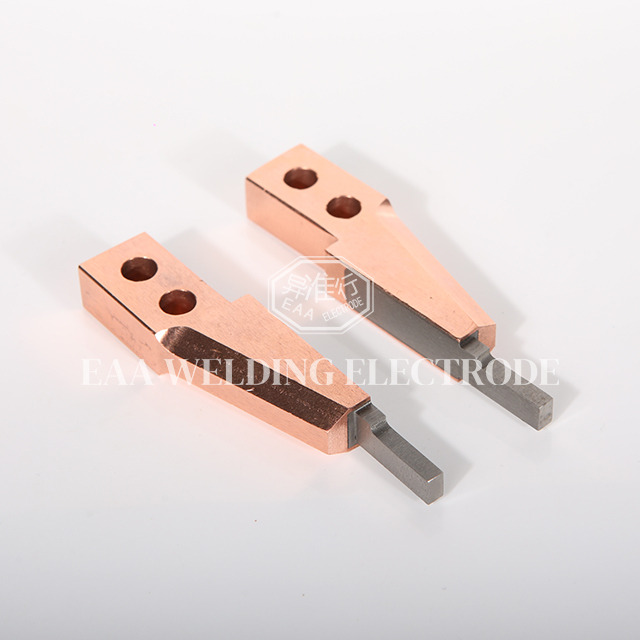
Group A encompasses various specialized copper alloys designed for standard manufacturing applications. These alloys offer excellent electrical conductivity alongside moderate mechanical strength.
Properties: These specific alloys boast the highest electrical conductivity among copper variants. However, they also possess the lowest physical hardness. Due to modern environmental regulations, copper-zirconium has largely replaced copper-cadmium globally.
Best for: Use them when welding highly conductive materials. They excel on aluminum alloys and magnesium components. They also work perfectly for coated or galvanized steels. Their high conductivity allows them to run cold, which actively resists surface alloying.
Properties: This class provides the optimal balance of electrical conductivity and mechanical strength. It remains the absolute workhorse of the global automotive industry. Copper-Chromium-Zirconium (CuCrZr) variants offer even better high-temperature stability.
Best for: Make this your default choice for cold-rolled steel. It handles stainless steel and low-alloy steels beautifully. It is ideal for high-volume spot welding cells where reliability is paramount.
Properties: Class 3 alloys trade lower electrical conductivity for extremely high physical hardness. They offer exceptional wear resistance under heavy mechanical loads. Non-beryllium alternatives like Copper-Nickel-Silicon are gaining popularity to avoid beryllium toxicity risks.
Best for: Deploy these robust alloys on high-resistance materials. They handle heavy cross-sections effortlessly. They are heavily utilized for projection welding dies. Choose Class 3 where mechanical wear poses the primary operational risk to your tooling.
Group B utilizes advanced refractory metals to handle incredibly severe conditions. These materials withstand extreme temperatures without yielding or deforming. Manufacturers produce them using sophisticated powder metallurgy techniques.
Properties: These composites combine the high conductivity of copper with intense heat resistance. Tungsten provides a durable internal skeleton. This matrix resists severe thermal shock and mechanical degradation. Many advanced Resistance Welding Electrodes fall into this highly specialized category.
Best for: They are perfect for flash welding dies. They also serve as excellent projection welding inserts. Use them in localized applications where intense heat would easily deform standard copper alloys.
Properties: These materials remain virtually non-consumable under standard operating conditions. They feature incredibly high melting points. However, they provide very low electrical conductivity compared to copper.
Best for: Use them for welding non-ferrous, highly conductive base metals. They work brilliantly on pure copper wire or brass electrical components. The low conductivity of the tip forces heat generation directly into the workpiece itself. This creates a specific thermal imbalance necessary for fusion.
Matching your electrode to the base metal requires strict engineering discipline. You cannot use a universal tip for every manufacturing application. The physical properties of the workpiece must dictate your material choice.
Galvanized and coated steels require Class 1 alloys. You can also use specialized dispersion-strengthened copper, like GlidCop. These materials run cooler than Class 2 alloys. This temperature control prevents zinc build-up on the face. It stops brass alloy formation, which rapidly degrades electrical transfer.
Aluminum alloys demand high-conductivity Class 1 electrodes. You should pair them with highly polished spherical radii. Aluminum features a tough exterior oxide layer. You must push massive current through this layer quickly. The polished surface effectively prevents frustrating surface sticking during the extraction phase.
High-strength and hot-stamped steels (AHSS) pose a distinctly different challenge. They often require Class 2 or Class 3 electrodes. These extremely tough base metals need massive forging forces for proper joint compression. Standard alloys would simply deform under such intense mechanical pressure.
Copper-to-copper joints require Class 13 (Tungsten) or Class 14 (Molybdenum). Joining highly conductive metals is notoriously difficult. You must manually create a thermal imbalance. These refractory metals force the weld nugget to form inside the copper workpiece rather than melting the electrode itself.
Base Metal Type | Recommended RWMA Class | Primary Engineering Rationale |
|---|---|---|
Galvanized & Coated Steels | Class 1 (or GlidCop) | Resists zinc build-up and actively prevents brass alloying on the tip surface. |
Aluminum Alloys | Class 1 | Maximizes conductivity; prevents workpiece sticking when highly polished. |
High-Strength Steels (AHSS) | Class 2 or Class 3 | Provides high mechanical yield strength to withstand massive required forging forces. |
Pure Copper or Brass | Class 13 or Class 14 | Forces concentrated heat generation into the workpiece due to low tip conductivity. |
Electrode geometry dictates exactly how current and force enter the workpiece. The physical shape of the cap profile influences nugget formation just as much as the material composition.
Pointed or Truncated: These profiles offer high precision and deeply concentrated heat. However, they wear much faster under heavy production loads. They require frequent redressing.
Dome or Radius: This remains the standard profile for high-volume automotive lines. They are significantly easier to align. They distribute mechanical force exceptionally well across the joint.
Flat: Use these specialized profiles when surface marring must be completely avoided. You will often pair a flat cap with a domed electrode on the opposite side to balance the heat.
You must assess operational efficiency and tooling scalability when designing your setup. High-production lines should utilize male and female tapered shanks paired with replaceable caps. This modular approach minimizes consumable material waste. It drastically reduces changeover times for maintenance personnel. Solid shanks are better suited for specialized, low-volume setups. Use them where physical clearance is highly restricted inside complex fixtures.
Even the highest quality materials fail if implemented poorly. You must proactively manage both physical and thermal stress across your production line.
Mushrooming occurs when the tip flattens out during continuous production. Excessive weld current or insufficient water cooling usually causes this severe defect. Using an RWMA class with insufficient hardness for the applied weld force dramatically accelerates deformation. As the tip flattens, the surface contact area increases. This causes the internal current density to drop exponentially. Weak, undersized welds are the immediate result.
Proper internal water cooling is absolutely mandatory for survival. The water cooling tube must be cut at a 45-degree angle. You must seat it at the absolute bottom of the electrode cooling cavity. This angled cut prevents restrictive steam pockets from forming inside the tip. A blocked or incorrectly positioned water line will destroy an electrode in mere minutes. Ensure your flow rate meets manufacturer specifications exactly.
You cannot ignore routine tip maintenance. Automated tip dressers are an absolute necessity in robotic welding cells. They physically shave the copper cap to maintain the exact desired geometric profile. This process also removes alloyed surface contaminants and oxidized layers. Consistent, automated dressing can easily extend overall tip life by over 300 percent.
Transitioning to a new tooling standard requires strict validation. Follow these specific steps to ensure a smooth, profitable integration.
Ensure your tooling supplier strictly adheres to AWS (American Welding Society) metallurgical standards. They should also follow RWMA guidelines explicitly. Always avoid undocumented alloys from unverified overseas sources. Poor material consistency will quickly ruin your quality control metrics.
Never buy materials in bulk without empirical proof. Mandate a pilot test on your specific metal stack-up. This testing should involve rigorous peel testing and thorough macro-etching of the joint. Confirm the nugget size meets your exact engineering requirements before authorizing a purchase.
Modern production environments require deep data visibility. Use modern weld controllers equipped with constant-current or adaptive feedback loops. These systems monitor exactly how the electrode degrades over thousands of cycles. They can automatically adjust heat parameters to compensate for gradual tip wear. This keeps your process stable between dressing cycles.
Selecting the correct resistance welding tools is a strict engineering matching process. It should never be treated as a simple commodity purchase based on unit price. You must carefully balance electrical conductivity with mechanical yield strength. This critical balance depends entirely on the specific thermal dynamics of your chosen base metal.
Review your current scrap rates immediately. Analyze your tip-dressing frequencies across your most active production cells. High failure rates indicate a fundamental mismatch in your current process. You may need an immediate electrode material or geometry upgrade. Taking decisive action now will secure your weld quality and permanently boost production efficiency.
A: Yes, they degrade via mechanical wear, thermal mushrooming, and surface alloying. Unlike non-consumable TIG electrodes, spot welding tips endure immense physical pressure and rapid thermal cycling. They require regular reshaping or complete replacement to maintain acceptable current density.
A: Class 3 contains different alloying elements like Beryllium or Nickel-Silicon. This composition makes it significantly harder and more wear-resistant than Class 2. However, it is less electrically conductive. Class 3 handles higher physical forces, while Class 2 offers better electrical efficiency.
A: Sticking usually occurs due to incorrect material matching. For example, using Class 2 on galvanized steel without proper stepping programs causes rapid alloying. Insufficient water cooling or excessive heat time also melts the surface prematurely, fusing the tip to the workpiece.
A: Replacement frequency varies wildly by application and material stack-up. Lifespan is usually measured in thousands of welds. Optimal life is achieved through periodic tip dressing to restore the profile, rather than relying on immediate cap replacement.


