


Views: 0 Author: Site Editor Publish Time: 2026-09-14 Origin: Site


High stakes exist in modern power distribution and energy storage sectors. Both severe thermal expansion and constant structural vibration can quickly destroy rigid conductive connections. You need specialized components built specifically to handle extreme physical stress over long operational lifespans. Engineers and system builders often default to whichever flexible connection sits readily available on the supply shelf. However, substituting a copper foil busbar for a woven alternative poses severe operational risks. This random swap easily leads to accelerated metal fatigue, dangerous localized heating, or catastrophic failure under heavy load.
The optimal material choice depends strictly on your installation’s unique ampacity requirements, spatial geometry constraints, and the exact axis of vibration. We will break down how to evaluate these critical engineering materials properly. You will learn actionable guidelines and industry best practices to protect your high-current systems from premature mechanical breakdown.
Copper Foil Connectors excel in high-current, low-profile applications requiring primarily linear thermal expansion compensation (e.g., switchgear, large BESS).
Copper Braided Cables are necessary for components subjected to continuous, multi-axis 3D vibration or irregular spatial routing (e.g., transformers, EV drivetrains, machinery).
Misalignment during installation is the leading cause of fatigue in foil connectors, whereas environmental degradation (fraying, oxidation) is the primary risk for unshielded braided connections.
Selecting the right copper braided cable supplier requires vetting their press-welding and crimping capabilities to ensure minimal contact resistance.
Modern electrical engineering relies heavily on two primary solutions to combat mechanical stress in power pathways. You must understand their internal physical construction to deploy them safely across varying environments.
A copper foil flexible connector consists of multiple stacked layers of exceptionally thin electrolytic copper strips. Manufacturers usually specify these individual strip thicknesses between 0.1mm and 0.3mm. These stacked strips fuse solidly together at the contact terminal areas. Premium factories achieve this permanent fusion using molecular diffusion welding or specialized press welding techniques. This creates a solid, unified block at the ends while leaving the center layers loose.
Its primary function focuses on absorbing linear expansion and contraction. Heavy-current systems naturally heat up during peak load and cool down during idle phases. This severe temperature fluctuation causes connecting components to expand outward and contract inward. The stacked component acts much like a precise metal accordion. It compensates seamlessly for this exact linear movement without transferring stress to the mounting bolts.
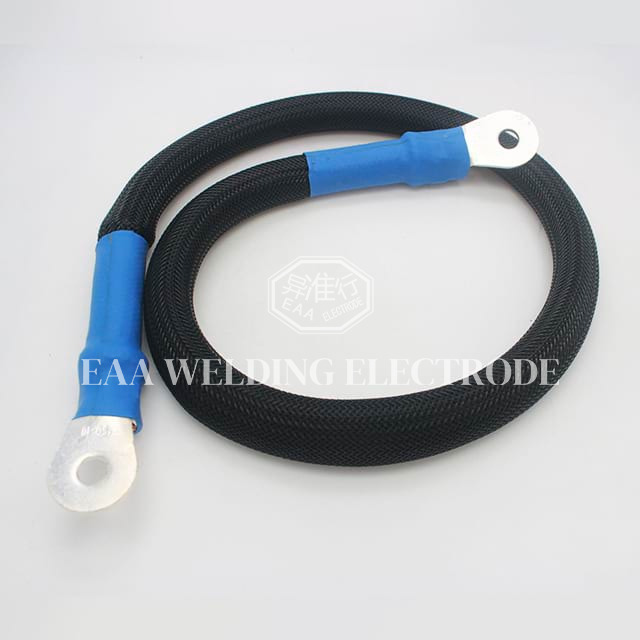
Alternatively, a copper braided flexible cable takes a vastly different structural approach. Specialized machines weave hundreds of fine copper wires together. This process forms a highly flexible tubular or flat conductive mesh. Installers typically insert the contact ends of this woven mesh into solid copper tubes. They then secure these ends permanently by cold-pressing or welding them into a rigid terminal block.
Its primary function provides true omnidirectional flexibility. The mesh effectively bridges awkward spatial gaps between vibrating or moving components. You use this specific option where strict rigid alignment proves physically impossible or where components vibrate aggressively in multiple directions simultaneously.
Choosing between these distinct materials requires analyzing both electrical performance metrics and physical movement patterns. Every specific application presents a unique combination of current load, frequency, and spatial stress.
Stacked components offer exceptionally high raw copper density. A solid fused terminal end contains virtually no internal air gaps. This dense solid mass minimizes electrical voltage drop across the connection interface. It also maximizes total ampacity per square millimeter of material. In high-power scenarios, you want as much conductive mass as possible in the smallest space.
Conversely, a woven mesh inherently traps tiny air pockets within the complex weave. These small gaps reduce the overall conductive metal mass within any given volume. To achieve the exact same ampacity as a solid busbar, the mesh must occupy a significantly larger physical footprint. You must rigorously account for this extra bulk when designing tight electrical enclosures or battery boxes.
High-frequency alternating current behaves quite differently than direct current. High-frequency AC aggressively pushes traveling electrons toward the outer skin of a conductor. Electrical engineers refer to this phenomenon as the skin effect. Solid thick bars lose deep core efficiency in these specific scenarios because the inner material goes largely unused.
Woven strands provide vastly more surface area than solid slabs of similar mass. This drastically increased surface area makes woven options highly efficient for high-frequency AC applications. They successfully mitigate skin effect losses by keeping significantly more conductive outer surface available for rapid electron flow.
Layered strips bend gracefully in one specific dimension. They move much like a standard door hinge operating on a fixed axis. However, they remain highly rigid and vulnerable against torsion or lateral shearing forces. If you twist them laterally during installation, they resist heavily and eventually fracture.
Mesh structures behave entirely differently under physical stress. They offer complete three-dimensional degrees of freedom. This true omnidirectional flexibility makes them perfect for absorbing aggressive, unpredictable shock. You will see them utilized heavily inside heavy industrial machinery, robotics, or mobile transit applications.
Material Comparison: Foil vs. Braided Connections
Evaluation Criteria | Foil Connections | Braided Connections |
|---|---|---|
Primary Movement Axis | Linear (1D Expansion/Contraction) | Omnidirectional (3D Vibration/Shock) |
Current Density | Extremely High (Minimal air gaps) | Moderate (Requires larger footprint) |
High-Frequency AC Performance | Average (Susceptible to skin effect) | Excellent (High surface area mitigates losses) |
Torsion Resistance | Poor (Prone to cracking if twisted) | Excellent (Handles twisting gracefully) |
Now let us accurately map these core materials to real-world engineering applications. Selecting the wrong component fundamentally leads to rapid field failures and dangerous safety hazards.
Utility-Scale Battery Energy Storage Systems (BESS): Massive industrial battery modules generate intense heat and expand linearly during rapid charge cycles. Stacked components safely absorb this exact linear push between battery racks.
High-Voltage Switchgear: Rigid heavy bus duct systems demand exceptionally clean, low-profile electrical connections. A Copper Foil Connector fits tightly into these constrained, high-power environments perfectly.
Automated Manufacturing: Factory installations prioritizing precise, repetitive automated assembly benefit massively from the predictable, rigid geometry of fused-end components. Robots can pick and place them easily.
Transformers and Generators: Heavy power transformers hum aggressively and vibrate continuously during operation. Omnidirectional structures absorb these multidirectional vibrations safely over decades of service.
Custom EV Battery Builds: DIY solar configurations and specialized electric vehicles often feature highly complex spatial routing paths. Space constraints frequently force tight, irregular bends. A Copper Braided Cable adapts instantly to these awkward shapes.
Dynamic Grounding Straps: Automotive and aerospace grounding applications guarantee constant, violent dynamic movement. You absolutely need an omnidirectional strap to ensure unbroken safety grounding during high-speed transit.
Even premium conductive materials will fail catastrophically if installed incorrectly. You must clearly understand how continuous mechanical fatigue and harsh environmental hazards degrade these vital components.
Conductive metals naturally work-harden when repeatedly bent beyond their engineered yield limits. The most common catastrophic field error involves forcing a flexible copper connector into an unnatural, aggressive twist. Unskilled installers sometimes do this to quickly compensate for poor structural alignment between two fixed busbars.
This forced torsion causes rapid structural work hardening within the thin constituent strips. The metal crystal structure changes under stress. The strips quickly become brittle and eventually crack open under normal thermal cycling. You must always align your solid busbars precisely before installing a linear jumper. Never use the jumper component to forcefully correct a sloppy mechanical gap.
Bare conductive metals remain highly susceptible to aggressive environmental attacks over time. Unshielded woven wires easily fall victim to rapid oxidation, harsh chemical corrosion, and severe physical fraying. Industrial dust, salt spray, and atmospheric moisture penetrate the open weave effortlessly.
To solve this, specify heavily tinned versions for any harsh operating environments. Tin plating acts as a robust, proven barrier against rapid oxidation. Additionally, you should use durable PVC or thick heat-shrink sleeving to protect the delicate mesh from physical abrasion. This added protection proves absolutely crucial for maintaining strict marine certifications or industrial automotive compliance standards.
The final connection point represents the most vulnerable section of any high-power cable assembly. You must evaluate the chosen termination method rigorously. Historically, soldered ends on woven mesh can accidentally wick hot solder up into the intended flexible area. This error creates a highly rigid, brittle "heat-affected zone" extremely prone to snapping under minor vibration.
Instead, demand advanced cold-pressed or modern diffusion-welded terminals from your manufacturer. These modern manufacturing methods represent the current baseline industry standard. They reliably minimize joint contact resistance while simultaneously maximizing mechanical pull strength.
Your strategic procurement decisions impact long-term system reliability directly. You must evaluate potential manufacturing partners strictly on their verifiable technical capabilities, rather than just their marketing materials or catalog prices.
Stacked layered connectors generally require highly specific, expensive custom tooling. Manufacturers must precisely calculate unique hole-punching alignments, exact bending angles, and precise layer counts specifically for your distinct project. This heavy front-end customization makes them far better suited for scaled, high-volume OEM production runs where tooling costs amortize effectively.
Conversely, woven stock offers much simpler procurement logistics. Installers can modify standard lengths easily on the fly during assembly. You can reliably purchase them in long bulk spools or pre-cut standard industrial sizes. This inherent logistical flexibility suits lower-volume manufacturing, prototyping phases, and custom field builds perfectly.
You simply cannot afford inconsistent terminal crimping in dangerous high-power systems. Follow these strict engineering criteria when shortlisting your manufacturing partners:
Verify Quality Certifications: Look exclusively for manufacturing facilities holding valid, audited ISO 9001 or stringent IATF 16949 certifications. These automotive-grade standards guarantee strict, repeatable quality control during the critical pressing and welding phases.
Demand Verifiable Testing Data: Do not accept vague marketing performance claims. Request documented, verifiable test data detailing exact contact resistance levels. Ask for verified continuous current ratings and ultimate tensile strength numbers specifically for the termination points.
Check Diverse Material Options: Ensure your chosen copper braided cable supplier easily provides robust tinned options for corrosive environments. They should also offer varied wire gauges within their weaves. Thinner constituent wires yield much higher mechanical flexibility, allowing you to fine-tune the precise mechanical response of the final assembly.
Choosing between these two flexible conductive technologies requires careful analysis of your physical operating environment. Use stacked layered solutions for heavy-current applications facing predictable, single-axis linear expansion. They deliver unmatched current density for tight, high-power switchgear and battery storage systems. Alternatively, deploy woven mesh solutions whenever your design involves continuous multi-axis vibration, highly complex routing paths, or high-frequency alternating current.
Remember that flexibility never excuses sloppy structural engineering. Proper mechanical alignment remains mandatory for system longevity. Implement strict torque specifications on all terminal bolts and provide adequate strain relief to ensure your connections function safely and efficiently for decades.
A: Yes, you can substitute it successfully. However, you must explicitly upsize the cross-sectional area to account for the internal air gaps inherent in the weave. You must also ensure the terminal ends are professionally crimped or ultrasonically welded to prevent dangerous high resistance points.
A: Tin plating provides a durable sacrificial barrier that actively prevents raw copper oxidation. This specialized coating maintains high electrical conductivity over long periods, especially in marine, highly humid, or chemically exposed industrial environments where bare metal degrades quickly.
A: Ampacity calculations require determining the total cross-sectional area (width multiplied by thickness multiplied by the number of active layers). You must then subtract a specific derating factor based on your operating ambient temperature and allowable temperature rise. Always consult the manufacturer's specific engineering charts rather than standard solid-bar tables.


