


Views: 0 Author: Site Editor Publish Time: 2026-03-23 Origin: Site


Spot welding is essential in industries like automotive, electronics, and construction, where metal sheets are joined efficiently. The key to strong, durable welds lies in selecting the right spot welding electrode.
In this article, we’ll discuss expert recommendations for long-lasting electrodes. We’ll explore the key factors to consider and recommend materials that ensure optimal performance and longevity.
When selecting materials for spot welding electrodes, several key factors need to be considered. These factors directly affect the performance, durability, and cost-effectiveness of the electrodes. Let's explore these factors in detail:
The primary function of spot welding electrodes is to transfer electrical current to the workpieces to generate heat, which fuses the materials. Electrical conductivity is one of the most critical factors in selecting an electrode material. High electrical conductivity allows for efficient energy transfer, which reduces energy losses and ensures sufficient heat generation at the weld spot.
Materials with excellent conductivity, such as copper and its alloys, are commonly used in spot welding electrodes because they minimize energy loss, ensuring that the majority of the electrical current is directed into the welding area. Poor conductivity leads to unnecessary energy wastage, which can result in longer welding times, higher power consumption, and inconsistent weld quality.
Thermal conductivity is another crucial factor to consider when selecting electrode materials. During the spot welding process, the electrodes generate a significant amount of heat. This heat must be effectively dissipated to prevent the electrodes from overheating and wearing out prematurely.
Materials with high thermal conductivity, such as copper alloys, help dissipate this heat efficiently, preventing overheating. Efficient heat dissipation also ensures that the weld area remains focused and controlled, leading to strong, consistent welds. On the other hand, materials with poor thermal conductivity can lead to overheating, causing the electrode material to degrade faster and reducing its overall lifespan.
Given that spot welding electrodes are exposed to high-pressure forces and intense heat during each welding cycle, they must possess sufficient hardness and wear resistance. The electrodes come into direct contact with the workpieces and must withstand significant mechanical stress, which can cause deformation and wear over time.
Materials with high hardness and wear resistance are essential for electrodes that need to endure extended production runs. Electrode materials that are too soft can quickly deform, leading to inconsistent welding quality and a need for frequent replacements. Materials with high hardness, such as certain copper alloys, offer superior durability and can maintain their shape under intense pressure, ensuring reliable performance over time.
Oxidation is a common issue that occurs when electrodes are exposed to high temperatures and oxygen during the welding process. Oxidation can reduce the effectiveness of the electrodes by increasing their resistance, which can disrupt the electrical current and cause inconsistent welds.
Materials with good oxidation resistance help maintain the electrical and thermal conductivity of the electrodes, even under extreme conditions. Copper-zirconium (CuZr) alloys, for example, are known for their resistance to oxidation, ensuring stable electrode performance and longer lifespan. Materials that resist oxidation also maintain better mechanical properties, reducing the likelihood of electrode failure due to degradation.
Selecting the right material for spot welding electrodes can make a significant difference in performance and longevity. Experts recommend various materials based on their specific properties, such as conductivity, resistance to wear, and heat dissipation. Below are some of the most commonly recommended materials for electrodes:
Material | Key Features | Applications |
Copper | Excellent conductivity and thermal properties | Ideal for low-carbon steels and mild steel welding |
Copper Alloys (CuCr, CuZr) | Improved hardness, wear resistance, and oxidation resistance | Welding high-strength steels, stainless steels |
Tungsten | High melting point, excellent hardness | High-temperature applications, stainless steel, titanium |
Tungsten Alloys (WCu) | Combination of tungsten’s high melting point and copper’s conductivity | Suitable for challenging welding applications |
Molybdenum | High melting point, excellent thermal conductivity | Ideal for welding high-temperature materials |
Copper is the most widely used material for spot welding electrodes due to its excellent electrical and thermal conductivity. Copper allows for efficient energy transfer to the workpieces, minimizing energy waste and ensuring that the weld spot receives the necessary heat. It also has good thermal conductivity, helping to dissipate heat and prevent overheating.
However, copper’s pure form may not be suitable for all welding applications, particularly those involving high-strength materials or high-volume production. This is where copper alloys come into play. Copper-chromium (CuCr) and copper-zirconium (CuZr) alloys are commonly used to enhance the hardness and wear resistance of the electrodes while retaining the excellent conductivity properties of copper. These alloys are ideal for welding materials that require more heat or higher mechanical stress, such as stainless steel or high-strength steels.
Copper alloys are also commonly used in robotic welding systems and automated assembly lines, where electrode longevity and consistent performance are essential.
Tungsten is another excellent material for spot welding electrodes, particularly in high-temperature applications. Tungsten has a very high melting point (about 3422°C), which allows it to withstand extreme temperatures without deforming or degrading. This makes tungsten electrodes ideal for welding materials with high melting points, such as stainless steel, titanium, and other refractory metals.
Tungsten-copper (WCu) alloys combine tungsten's high melting point with copper’s excellent conductivity, offering a balanced set of properties that can withstand high-temperature welding applications. Tungsten-based electrodes are often used in industries such as aerospace and automotive, where high-performance materials and precise welding are required.
While tungsten electrodes are durable and capable of handling extreme conditions, they have lower electrical conductivity compared to copper, which is why they are typically used in applications requiring both heat resistance and conductivity.
Molybdenum is a strong contender as a spot welding electrode material, especially for high-temperature welding applications. Like tungsten, molybdenum has a high melting point (about 2623°C) and excellent thermal conductivity. This makes it suitable for welding materials that generate significant heat during the process, such as high-strength alloys.
Molybdenum electrodes are particularly useful for welding materials that are sensitive to contamination, as molybdenum is less reactive with many metals compared to copper and tungsten. This makes molybdenum a valuable material for welding precision components in industries such as electronics, where contamination can significantly affect product performance.
Although molybdenum has lower electrical conductivity than copper, its other properties make it an excellent choice for specific high-temperature welding applications where contamination must be minimized.
Lanthanated tungsten electrodes represent a significant advancement in electrode technology. By adding small amounts of lanthanum oxide (typically 1-2%) to tungsten, the resulting lanthanated tungsten electrodes offer improved arc stability, reduced contamination, and enhanced performance over longer welding cycles.
Lanthanated tungsten electrodes are particularly beneficial in high-precision applications that require consistent welds over extended periods. The addition of lanthanum oxide improves the recrystallization temperature of the electrode, making it more resistant to deformation under high heat and mechanical stress. This makes lanthanated tungsten electrodes ideal for applications in the aerospace, electronics, and medical device industries.
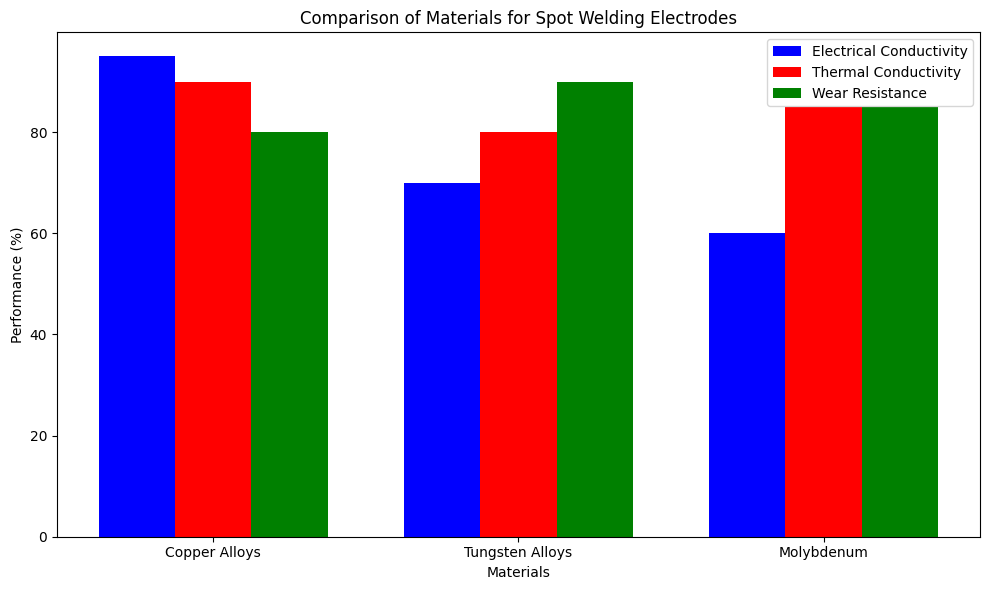
Selecting the best material for spot welding electrodes depends on several factors, including the type of workpiece, the welding machine, and the specific requirements of the job. Below are some expert tips for making the right choice:
Factor | Recommendation for Electrode Material |
Workpiece Material | Copper alloys for steel; Tungsten for high-melting materials (e.g., titanium) |
Spot Welder Type | Copper alloys for portable welders; Tungsten alloys for high-temperature welders |
Welding Environment | Copper for low-to-medium-volume work; Tungsten alloys for high-volume, demanding environments |
Durability and Cost | Copper alloys for cost-effective, reliable use; Tungsten alloys for long-term savings despite higher initial cost |
The first step in choosing the right electrode material is considering the type of workpiece being welded. Different materials require different electrode properties to ensure a strong, consistent weld. For example, aluminum requires electrodes that can handle its high thermal conductivity and tendency to stick to the electrodes, while stainless steel requires electrodes with higher wear resistance to handle the higher mechanical stress.
Understanding the material of the workpieces helps in selecting an electrode material with the appropriate thermal, electrical, and mechanical properties. In some cases, specialized alloys may be necessary to prevent issues such as oxidation, contamination, or inadequate heat generation.
The type of spot welder used also affects the selection of electrode material. For portable spot welders, lighter electrodes made from copper alloys are often preferred due to their balance of conductivity and weight. For automated and robotic systems, electrodes made from copper-chromium alloys or tungsten may be more suitable for long-term, high-volume production.
Advanced spot welders, such as those used in precision welding applications, may require electrodes made from materials like lanthanated tungsten or molybdenum, which offer superior performance in high-precision settings.
When selecting spot welding electrodes, it is important to weigh the upfront cost of high-performance materials against the long-term savings they provide. While materials such as tungsten and molybdenum may be more expensive, they offer greater durability and longer lifespans, reducing the frequency of electrode replacements and minimizing downtime.
In high-volume production environments, the use of more durable materials can lead to substantial savings over time, as they improve welding consistency and reduce the need for maintenance. On the other hand, for small-scale or less demanding applications, copper electrodes may be a more cost-effective solution without sacrificing too much on performance.
Proper maintenance of spot welding electrodes is essential to ensure they remain effective and durable throughout their lifespan. Below are some expert recommendations for maintaining electrodes to optimize performance:
To maintain consistent welding quality, electrodes should be cleaned regularly to remove any build-up of oxidation, dirt, or other contaminants. This ensures that the electrodes continue to transfer electrical current efficiently and maintain their shape. Regular dressing of the electrode tips also helps preserve the proper geometry, which is critical for producing uniform welds.
Electrode wear can impact the consistency and strength of welds. Monitoring the wear on the electrodes and replacing them when necessary ensures that the welding process remains efficient and produces high-quality results. It’s essential to check for signs of electrode degradation, such as tip flattening or excessive wear.
Using proper cooling systems is critical for preventing electrode overheating, especially in high-volume production environments. Water-cooled electrodes or cooling rings help dissipate heat and prolong electrode life. Regular maintenance of cooling systems is also important to ensure optimal cooling performance, which can further extend the longevity of the electrodes.
Selecting the right materials for spot welding electrodes is critical for achieving high-quality, long-lasting welds. Copper and its alloys remain the most popular choice due to their excellent conductivity and thermal properties. However, tungsten, molybdenum, and advanced alloys like lanthanated tungsten provide excellent performance in high-temperature and high-precision welding applications.
At Guangzhou Yizhunxing International Trade Co., Ltd., we offer high-quality spot welding electrodes designed to deliver superior performance and extended lifespan. By selecting the right electrode materials and maintaining them properly, manufacturers can optimize their welding processes and reduce overall costs.
Whether you're welding automotive parts, electronics, or industrial components, choosing the right electrode material is essential for achieving strong, durable, and reliable welds.
A: A spot welding electrode is a tool that conducts electrical current and applies pressure to fuse two metal pieces together during the spot welding process.
A: The material of a spot welding electrode affects its conductivity, heat resistance, and wear resistance, all of which influence the efficiency and longevity of the weld.
A: Experts recommend copper alloys, tungsten alloys, and molybdenum for long-lasting spot welding electrodes due to their excellent conductivity, heat resistance, and durability.
A: Regular cleaning, dressing, and monitoring wear are essential for maintaining spot welding electrodes and ensuring consistent weld quality.
A: While high-performance materials like tungsten may cost more upfront, they offer longer electrode life and better weld quality, reducing overall costs in the long term.


