


Views: 0 Author: Site Editor Publish Time: 2026-03-23 Origin: Site


Spot welding is one of the fastest and most cost-effective methods to join two metal parts. But what makes this process so reliable across different industries? The answer lies in Spot Welding Electrodes. These electrodes play a critical role in ensuring the speed, precision, and durability of the welds.
In this article, we will explore how Spot Welding Electrodes are applied across various sectors, including automotive, electronics, aerospace, and renewable energy. You will learn how they enhance product quality and manufacturing efficiency while contributing to cost-effective production processes.
The automotive industry is one of the largest consumers of spot welding electrodes. Spot welding is crucial in assembling car bodies, especially for welding body panels, frames, and other critical components. The process is fast, and the welds produced are strong, ensuring the structural integrity of vehicles. Since spot welding allows the joining of metal sheets without filler materials, it helps reduce both cost and labor while maintaining strength.
The automation of the spot welding process using robotic systems further increases the efficiency of car manufacturing lines. Spot welding electrodes are integral to automating these systems, ensuring precision in mass production and reducing human error.
Component | Material | Welding Electrode Material | Welding Parameters |
Car Body Assembly | Steel (mild, galvanized) | Chromium-Zirconium Copper (CuCrZr) | Current: 5-15 kA, Time: 0.5-1.5 seconds |
Frame Welding | High-strength steel | Beryllium Copper (CuBe) | Current: 8-12 kA, Pressure: 60-90 MPa |
Door and Roof Panels | Aluminum Alloy | Chromium Copper (CuCr) | Current: 6-10 kA, Time: 1-2 seconds |
In automotive manufacturing, precision is crucial, especially for components such as subframes, seat tracks, and chassis. Spot welding electrodes play a key role in achieving the necessary precision for these parts. The material of the electrodes affects the quality of the weld, ensuring that the components are joined securely. High-performance materials like Chromium-Zirconium Copper (CuCrZr) are commonly used in spot welding for their excellent conductivity and abrasion resistance.
The precision of spot welding electrodes helps ensure that welds are uniform and strong, which is critical for safety and performance in automotive components. The use of advanced materials for electrodes leads to reduced wear and a longer lifespan for the welding tips, ensuring that manufacturers maintain consistent weld quality.
Robotic systems have revolutionized the automotive industry, and spot welding electrodes are central to this automation. In high-volume production environments, such as car assembly lines, spot welding robots perform welding tasks with incredible precision and speed. This integration allows for mass production while maintaining high standards of quality.
The electrodes used in these robotic systems must withstand continuous use without significant degradation. The ability to automate the process ensures that manufacturers can meet high demand without sacrificing quality or efficiency.
The electronics industry relies heavily on spot welding electrodes, particularly in the production of battery packs, such as lithium-ion batteries. Spot welding is used to connect battery terminals and other components, ensuring a strong and reliable electrical connection. The process minimizes heat damage, which is critical for maintaining the integrity and safety of the batteries.
In electric vehicles, the battery pack is one of the most critical components, and the reliability of the welds plays a significant role in the battery's overall performance. Spot welding electrodes ensure that the connections in battery packs are secure, providing the necessary durability and efficiency for high-demand applications.
Application | Material | Electrode Type | Typical Welding Parameters |
Lithium-ion Battery Welding | Nickel, Copper | Copper Alloy Electrodes | Current: 3-8 kA, Time: 1-2 seconds |
Battery Tab Welding | Aluminum, Steel | Chromium-Zirconium Copper (CuCrZr) | Current: 5-12 kA, Time: 0.5 seconds |
Spot welding is widely used in the electronics sector for delicate components such as circuit boards, switches, and connectors. The ability to control the heat generated during the welding process ensures that these sensitive components are not damaged by excessive temperatures. Spot welding electrodes provide the necessary precision to create strong bonds without affecting the surrounding parts.
The compact nature of spot welding is ideal for electronic applications where only small contact areas are needed, reducing the risk of heat damage and maintaining the integrity of the device.
The electronics industry often requires high-volume production of components such as solar panels, circuit boards, and mobile devices. Spot welding provides a quick, efficient, and reliable method for joining metal components. With spot welding electrodes, manufacturers can produce consistent, high-quality welds at scale, which is essential in maintaining high productivity in the competitive electronics market.
Spot welding plays a pivotal role in the aerospace industry, particularly in the assembly of lightweight structures made from materials such as aluminum and titanium. These materials are commonly used in aircraft construction due to their strength-to-weight ratio. Spot welding electrodes are employed to join these materials with precision, ensuring the structural integrity of the aircraft.
The use of spot welding in aerospace manufacturing helps ensure that each component meets stringent safety and performance standards. The electrodes used in these applications are designed to withstand the harsh conditions of the aerospace industry, offering durability and longevity.
Component | Material | Electrode Type | Welding Parameters |
Aircraft Fuselage | Aluminum, Titanium | Molybdenum Copper Alloy | Current: 10-12 kA, Time: 1.5-2 seconds |
Wing Components | Aluminum Alloy | Beryllium Copper (CuBe) | Current: 9-15 kA, Pressure: 60 MPa |
Spot welding is also widely used in the military industry for joining critical components such as missile bodies and armored vehicle parts. These parts must meet high standards for safety, strength, and performance. Spot welding electrodes help ensure that these components are securely joined, with minimal distortion or heat-induced damage.
The ability to produce consistent and reliable welds is crucial in military applications, where the stakes are high, and failure is not an option. The precision and efficiency of spot welding make it an ideal choice for manufacturing defense equipment that must withstand extreme conditions.
Spot welding is integral to the home appliance manufacturing sector. Appliances such as refrigerators, washing machines, and air conditioners all rely on spot welding to join metal components. Spot welding electrodes are used to weld parts such as metal casings, internal baffles, and terminal connections, ensuring that the appliance is durable and safe for use.
The speed and cost-effectiveness of spot welding make it the preferred method for producing high-quality household appliances at scale. The electrodes used in appliance manufacturing must be capable of performing high-volume welding without significant wear.
The integration of automated spot welding systems has revolutionized the home appliance industry. Spot welding electrodes are used in robotic systems that can perform welding tasks continuously and with great accuracy. Automated welding systems ensure consistency and high throughput, enabling manufacturers to meet high demand while maintaining quality standards.
In the renewable energy sector, spot welding is critical for assembling solar panels. The components of solar panels, such as connectors and metal frames, are often welded using spot welding technology. Spot welding electrodes ensure that these connections are strong, durable, and resistant to outdoor conditions, which is essential for the longevity and performance of solar panels.
The ability to join metal components without affecting the delicate circuitry of the solar cells is a significant advantage of spot welding. This technique helps in producing solar panels that can withstand the rigors of outdoor environments while maintaining their efficiency.
As the electric vehicle (EV) market continues to grow, the demand for spot welding electrodes increases. Spot welding is used extensively in the production of EV batteries and components, such as battery packs, busbars, and wiring harnesses. The precision and control offered by spot welding ensure that these components are securely connected, providing the necessary performance and safety features for electric vehicles.
In the furniture manufacturing industry, spot welding electrodes are used to join metal parts such as frames, legs, and supports for tables, chairs, and other items. This process ensures that the furniture is durable and capable of withstanding everyday use. The ability to weld metal components quickly and efficiently makes spot welding an ideal choice for mass production of metal furniture.
In smaller-scale fabrication and repair shops, spot welding is often used to repair or fabricate metal parts. Whether it's fixing metal doors or reshaping automotive parts, spot welding electrodes are crucial in ensuring that the repair is both strong and efficient. The precision and speed of spot welding make it ideal for quick repairs in a variety of industries.
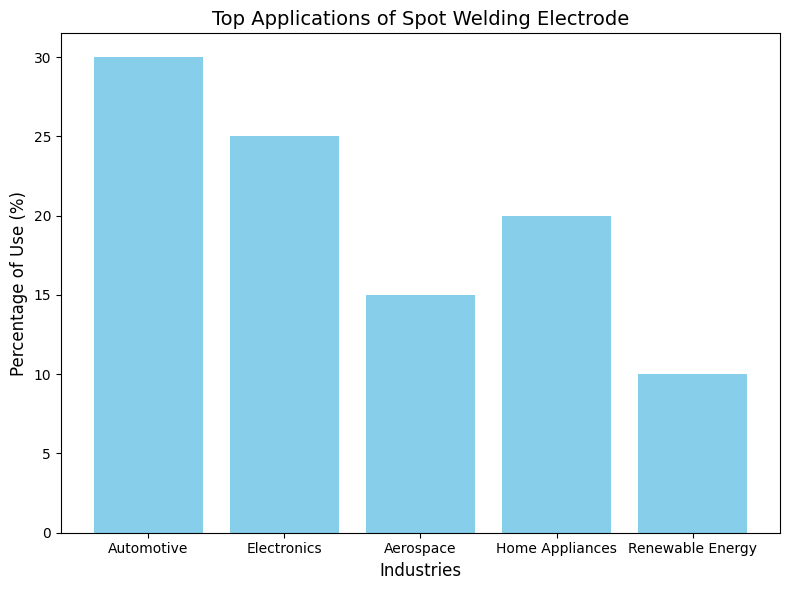
In conclusion, spot welding electrodes play a crucial role in industries like automotive, aerospace, electronics, and renewable energy. Their ability to create strong, precise welds makes them essential for modern manufacturing. As technology advances, the use of spot welding electrodes will continue to enhance production efficiency.
Guangzhou Yizhunxing International Trade Co., Ltd. offers high-quality welding electrodes designed for various industrial needs. Their products help improve the durability and safety of your manufacturing processes.
A: A spot welding electrode is a key component in the spot welding process. It conducts electrical current and applies pressure to join two metal parts.
A: Spot welding electrodes are crucial for ensuring strong, precise welds. They help improve welding efficiency, consistency, and the overall quality of products in mass production.
A: Spot welding electrodes apply pressure and electrical current to metal sheets. This process generates heat, fusing the parts together at specific points, creating a strong weld.
A: Common materials for spot welding electrodes include copper alloys like Chromium-Zirconium Copper (CuCrZr) and Beryllium Copper (CuBe) for their conductivity and durability.
A: The lifespan of spot welding electrodes depends on the material and usage. They typically last between 500 and 2,000 cycles, requiring replacement based on wear.


