


Views: 0 Author: Site Editor Publish Time: 2026-03-23 Origin: Site


Spot welding is an essential technique used in many industries, particularly in automotive and electronics. But how do you ensure high-quality welds? The answer lies in the Spot Welding Electrode. These electrodes conduct current and apply pressure to create strong, reliable welds.
In this article, we will explore the different types of Spot Welding Electrodes, their unique properties, and how to choose the right one for your welding needs. By understanding the types and their applications, you can optimize your welding operations.
Before diving into the specifics of the different types of Spot Welding Electrodes, it’s important to understand their essential role. A Spot Welding Electrode primarily functions as a tool to conduct electrical current while applying pressure at the welding point between the two materials being joined. The process involves applying a high amount of pressure to two metal sheets, causing them to heat up due to electrical resistance. The heat generated at the contact points leads to the metal melting and bonding.
The electrode material is a crucial factor in determining the efficiency and quality of the weld. Different materials have varying levels of conductivity, heat resistance, and wear resistance, making it essential to choose the right electrode material for the specific welding application. The right Spot Welding Electrode ensures better heat distribution, longer electrode life, and consistent weld quality, making it a key component in maintaining production efficiency.
The material choice for Spot Welding Electrodes varies depending on the type of materials to be welded and the specific application. Each electrode material comes with unique benefits, and understanding these characteristics helps ensure optimal weld quality and efficiency.
Copper alloys are the most commonly used material for Spot Welding Electrodes, especially in applications that require high electrical and thermal conductivity. Copper is an excellent conductor, which is crucial for quickly generating the required heat to form the weld. However, pure copper is relatively soft and can wear out quickly, which is why it’s often combined with other materials such as chromium or zirconium to enhance its hardness and resistance to heat.
● Copper-Chromium (CuCr) is one of the most common copper alloys used in spot welding electrodes. It combines copper’s excellent conductivity with chromium’s ability to increase hardness, making it ideal for medium-duty applications, particularly in automotive manufacturing.
● Copper-Zirconium (CuZr) is another alloy that offers improved resistance to softening at high temperatures. This is especially important for high-current applications and when welding thicker materials, such as those used in the automotive and appliance industries.
● Copper-Tungsten (CuW) combines copper’s conductivity with tungsten’s strength and heat resistance. It is used in applications that require higher current and heat resistance, such as welding high-strength steel and other heavy-duty materials.
Tungsten is a refractory material, meaning it has an exceptionally high melting point (over 3,400°C). This makes Tungsten Electrodes highly suitable for applications that require welding of materials exposed to extreme temperatures. Despite having lower electrical conductivity compared to copper alloys, tungsten’s high strength and heat resistance make it indispensable for welding high-temperature metals such as titanium, molybdenum, and other high-strength alloys.
Tungsten Electrodes are often used in applications where precision and durability are essential. They are especially useful in aerospace, military, and high-performance manufacturing, where the materials being welded need to withstand high temperatures without compromising the quality of the weld.
Molybdenum, like tungsten, is a refractory material known for its high melting point (2,623°C) and excellent resistance to oxidation. This makes Molybdenum Electrodes highly effective for welding materials that require high heat resistance, especially in aerospace and electronics manufacturing. Molybdenum offers high strength, durability, and excellent thermal conductivity, making it ideal for welding alloys used in demanding environments.
Unlike tungsten, Molybdenum Electrodes are more resistant to oxidation, making them suitable for applications where oxidation could be a concern. The material also has better machinability compared to tungsten, allowing it to be shaped into various electrode tips for specialized welding tasks.
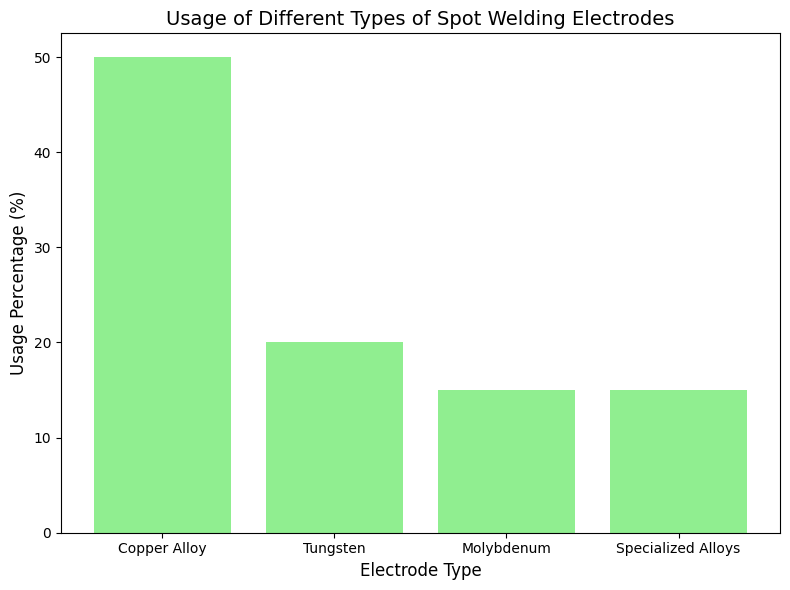
In heavy-duty applications, Copper-Tungsten (CuW) and Copper-Nickel-Silicon alloys are used for Spot Welding Electrodes that need to handle high current and resist wear under extreme conditions. These alloys offer a combination of copper’s excellent conductivity and the strength and heat resistance provided by tungsten and nickel-silicon. These materials are ideal for welding high-strength materials and for use in industries that demand high-performance welding.
For example, Copper-Tungsten electrodes are commonly used in automotive industries for welding heavy steel components, while Copper-Nickel-Silicon alloys are favored for heavy-duty industrial tasks that require consistent welds under high pressure.
Refractory electrodes, particularly Tungsten and Molybdenum, are suitable for welding materials that require high temperatures. These electrodes are designed to withstand intense heat while maintaining their structural integrity, making them ideal for welding high-strength alloys, titanium, and nickel-based superalloys.
Although Tungsten and Molybdenum electrodes are more difficult to machine compared to copper alloys, their heat resistance and wear characteristics make them indispensable in high-performance applications.
Choosing the appropriate Spot Welding Electrode depends on the material being welded. For example, when welding aluminum, which has high conductivity, an electrode with a low resistance is necessary to maintain efficient heat generation. On the other hand, when welding stainless steel or other high-resistance materials, a tougher electrode material that can withstand higher temperatures is needed.
Understanding the "rule of opposites" helps guide the electrode selection: high-conductivity electrodes are used for welding resistive materials, and lower conductivity electrodes are used for welding high-conductivity metals.
When selecting a Spot Welding Electrode, manufacturers should balance several factors:
● Heat Resistance: Materials like Tungsten and Molybdenum are ideal for high-temperature applications.
● Wear Resistance: Copper-Zirconium and Copper-Tungsten electrodes have longer life spans due to their heat resistance.
● Cost: Copper alloys are typically more cost-effective, while refractory materials like tungsten and molybdenum come at a higher price but are better suited for specific applications.
Proper maintenance is critical for extending the life of Spot Welding Electrodes. Regular cleaning of the electrode tips, reshaping when necessary, and ensuring the electrodes are adequately cooled during welding can significantly prolong their lifespan. Overheating can cause electrode tips to degrade quickly, leading to poor weld quality and more frequent replacements.
Electrodes should be replaced when they show signs of significant wear, such as tip deformation, loss of electrical conductivity, or decreased welding efficiency. Regular inspection can help identify when it’s time to replace an electrode, ensuring consistent weld quality and minimizing production downtime.
The future of Spot Welding Electrodes lies in the continuous development of new materials that offer better performance, higher durability, and greater heat resistance. Research is focused on creating alloys that can handle high temperatures, improve conductivity, and reduce wear over time. New composite materials and coatings are also being explored to further enhance electrode life.
Sustainability in manufacturing is an increasing focus, and the electrode industry is also evolving to address environmental concerns. The use of recyclable and eco-friendly materials in Spot Welding Electrodes is expected to rise. These innovations help reduce the environmental impact of welding operations while also providing more cost-effective solutions for manufacturers.
Selecting the correct Spot Welding Electrode is essential for achieving high-quality welds and optimizing welding operations. Understanding the different types of electrodes, such as copper alloys, tungsten, and high-strength alloys, helps manufacturers make informed decisions that improve performance and extend electrode life. Proper material selection and maintenance are key to consistent, reliable results.
Guangzhou Yizhunxing International Trade Co., Ltd. offers a range of high-quality Spot Welding Electrodes designed for various applications. Their products provide durability and efficiency, helping manufacturers achieve superior welding outcomes.
A: Spot Welding Electrodes are typically made of high-conductivity materials like copper alloys, tungsten, or molybdenum, which ensure efficient heat generation during welding.
A: Choose a Spot Welding Electrode material based on the workpiece material. Copper alloys are ideal for low-resistance materials, while tungsten and molybdenum are better for high-temperature applications.
A: Copper-Alloy Electrodes offer excellent conductivity, durability, and cost-effectiveness. They are ideal for medium-duty welding applications, such as automotive manufacturing.
A: The Spot Welding Electrode material determines heat generation, conductivity, and wear resistance, directly affecting weld strength, consistency, and longevity.
A: Tungsten Electrodes have high melting points, making them suitable for welding high-strength alloys and materials exposed to extreme heat, such as in aerospace applications.


